Showing posts with label clean eating. Show all posts

Switch Witch Saves Family from Candy Overload


[This post may contain affiliate links.]

Every Halloween parents everywhere face a daunting problem: what to do with all that candy???

Here's how we handle Halloween in our family.

Our children collect obscene amounts of candy trick-or-treating. When they return home, they may eat 3 or 5 (there are often negotiations) pieces of candy right then. I am aware that they snitch candies while trick-or-treating or even back at home. I am just trying to contain the deluge. I also try to steer them away from what I consider to be the most disgusting candy because it pains me to watch them eat it.

All the rest of the candy gets left near the fireplace for the Switch Witch, usually right in their trick-or-treat bags.

5 Reasons to Choose Antibiotic-free Meat


Antibiotics are routinely given to livestock as a part of their feed to promote faster growth and to prevent diseases that may result from unhealthy living conditions. In fact, an astonishing 80 percent of all antibiotics used in the United States are given to animals, not people. You can limit your family's exposure to superbugs and help preserve the efficacy of antibiotics for everyone by saying no to products from animals raised with antibiotics. 

Here are 5 reasons to choose antibiotic-free animal products.


Even Meat Labeled "No Nitrates or Nitrites Added" Contains Harmful Nitrites


For those trying to avoid the cancer-linked preservatives nitrates and nitrites, I have some bad news.

All processed meats -- that's bacon, deli meat, sausages, hot dogs, pepperoni, salami -- contain nitrates and nitrites, even those natural or organic products labeled as "uncured" with "no nitrates or nitrites added." Take a look at the additional (sometimes very fine) print on your favorite "uncured" meat and you will most likely find some wording similar to the following: "no nitrates or nitrites added except for those naturally occurring in ingredients such as celery juice powder, parsley, cherry powder, beet powder, spinach, sea salt etc." (emphasis mine).

The Perks of Being a Regular at the Farmers Market

No matter what time of day I shop, this farmer gives me the end-of-the-day special.

Find your local farmers markets here.

I've been shopping at the same small neighborhood farmers market for about four years. Shopping at the farmers market has numerous benefits, from fresher and better tasting produce, to the welcome absence of produce stickers and high fructose corn syrup. Here are some of the perks that I get for being a regular that go above and beyond the regular benefits.

My Surrogate Garden: the Farmers Market


So here's the deal. I don't have a garden. I drool a bit over all the garden photos on The Green Phone Booth and elsewhere. I even have a Pinterest Garden board. I do aspire to having a garden, but I just don't have the mental space, time, or energy to embark on this new endeavor just yet. (If you'd like to come plant stuff in my yard for me and tell me exactly what to do afterwards, just let me know!)

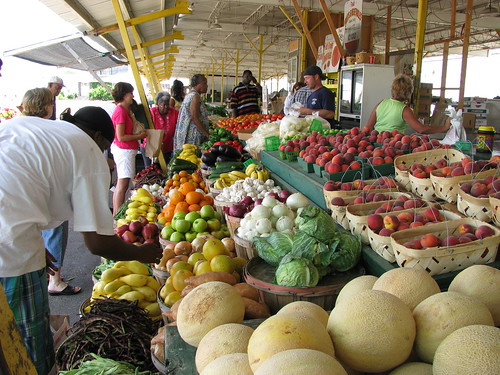
But you know what I've got? I've got the farmers marketAnd oh, how I love the farmers market. I shop at one, sometimes two farmers markets every Saturday and purchase at least 90% of my family's produce there (bananas being the major exception). I kind of like to think of the farmers market as my garden. My surrogate garden, if you will. So for the last few weeks, I've been annoying my children by whipping out my smart phone to take photos at the farmers market.

Are you ready? Here are some photos of my pride and joy: my local farmers markets.

Click here to continue reading at The Green Phone Booth.


Hate Stirring Natural Nut Butters? Read This.


Does this happen to you?

As I get to the bottom of a jar of peanut butter, or almond butter, or tahini, I feel a vague sense of dread. It's the knowledge that soon, very soon, I will have to open a new jar of nut butter, and that entails trying my very best to integrate that layer of oil sitting on the top into the entire jar. Whether you use a fork, knife, or some other utensil, this process inevitably involves making a greasy mess on your hands, the outside of the jar, and on the surface beneath the jar.

At least that used to happen to me, until I discovered one of the finest inventions ever: the Witmer Mess-free Peanut Butter Mixer.

Are Full-fat Dairy Products Good for You?


Reconsidering Full Fat Dairy


For years my family has been eating organic whole plain yogurt produced by a local creamery. I chose whole yogurt (over lowfat or nonfat) mostly because it was creamy delicious. In addition, I had read that whole dairy products were important for women during their child-bearing years, and that doctors recommend whole dairy products for children under the age of 2 because young children need lots of fat for their developing brains. Also there is the fact that, as a general rule, we aim to eat foods in their most natural and least processed state as often as possible.

But recently I began questioning the healthiness of whole fat dairy.

11 Things You Will Not Find at a Farmers Market

photo credit: Patrick Kuhl

I stepped into a Safeway the other day to pick up a few things for a sick child, and was surprised by the number of organic foods available. That's progress, I think. Still, I could have done without the helium balloons, aisles of candy and toys, and row upon row of packaged foods. My little shopping trip left me with a renewed appreciation for the farmers market.

11 things you will not find at a farmers market

  1. Little plastic stickers on every piece of produce
  2. Foods with tie-ins to popular TV characters
  3. High fructose corn syrup
  4. Magazines with scantily clad photo-shopped women prominently displayed
  5. Cheap toys
  6. Aspartame and other artificial sweeteners
  7. Candy at my kids' eye level in the checkout line
  8. Fluorescent breakfast cereals and yogurt
  9. Bread with more than 20 ingredients
  10. Eggs from caged chickens
  11. Sodium Benzoate and other preservatives

When I shop with my 3 little ones at the farmers market, instead of my kids nagging me for Doritos or Fruit Loops, they beg me for blueberries, dried persimmons, and grapes. If you are trying to switch from food-like substances to real foods, the farmers market is a great place to start! Find your local farmers markets here.

Feel free to pin or otherwise share:
photo credit: Natalie Maynor

What would you add to the list?

Related Posts


Check out these additional posts about real food by Green Sisterhood bloggers:

Would you like more ideas and tips about Going Green Gradually? Sign up for my free email subscription to get each of my posts delivered to your inbox (I usually post one or two times a week). You can also follow me on Facebook, Google Plus, Pinterest, Twitter, or with your favorite RSS Reader. I hope to see you again soon!

How to Eat Less Meat


For the sake of the health of the planet and our family (not to mention the pocketbook), we are always looking for ways to lower our meat consumption. Here are some methods that have worked for my family.

Use meat as a seasoning rather than a main dish.

I could eat vegetarian (vegan would be much tougher) if I really wanted to. I could do it. But the truth is, I like a little meat. One of my favorite ways to enjoy the taste of meat while consuming less of it is to use meat as a seasoning rather than the main attraction of a meal. A perfect example is my delicious hearty lentil soup. This filling soup is mostly lentils and vegetables, but the few ounces of bacon plus chicken broth make this a very flavorful and hearty soup.

Sweets and Treats I Let My Kids Eat


Halloween is just a few days away and I've been making my preparations for the Switch Witch's visit. My children leave all their candy for the Switch Witch on Halloween night, and in return she leaves them a gift and a small quantity of better (less bad) candy. I've resigned myself to the fact that my children will get lots of extra sugar on many occasions and holidays throughout the year, but I'd like to avoid feeding them the food additives and other weird ingredients that often accompany the sugar. Ingredients such as:

I also like to avoid chocolate produced by child slave labor (pretty much all chocolate in mainstream candy, sadly). Yes, I do realize, I'm sucking all the joy out of eating candy.

Here are a few of the treats I let my kids eat:

I actually have some of these treats on hand at all times, because I've learned that people love to throw candy and treats at children at all times of the year, and I always need to be ready to make an exchange.

But I wonder how long I'll be able to keep this up. 

If you have older kids or teenagers, how do handle Halloween and other occasions filled with candy (Easter, Valentines, etc.)?

And on a related note, there is the dilemma of what to do with the conventional candy I collect from my kids. If you have a solution for that, click over and comment on this week's Green Phone Booth post.

Related Posts


Are you interested in Going Green Gradually? Sign up for my free email subscription to get each of my posts delivered to your inbox (I usually post two or three times a week). You can also follow me on FacebookTwitter, or with your favorite RSS Reader. I hope to see you again soon!


Disclosure: This post contains Amazon affiliate links. Your purchase via these links helps support my blog. Thank you for your support. Read my full disclosure policy here.

Almost Plastic-free Pizza


I did it! I finally found a tomato sauce jarred in glass that works as a base for my sauce for our Friday night pizza!

Eden Organic's Crushed Tomatoes are thick and just barely chunky ("screen-finished" rather than pureed), and come in several varieties (roasted garlic and onion, sweet basil, plain). I think I like the garlic and onion one the best, but I've tried them all and they all work. I buy them in bulk at Whole Foods every couple of months. I should probably ask Whole Foods about getting the case discount. You can also purchase directly from Eden Organic. One 25 oz. jar costs about $4, but since the jar is almost double the size of a can, I get two weeks' worth of pizza out of it (the sauce lasts fine for at least a week stored in the fridge) and it ends up costing me about the same as the Muir Glen organic tomato sauce in BPA-free cans.

I bought a few other tomato products in glass (Bionaturae) and the less-preferred Tetrapak (Pomi) to try, but I sampled the Eden Organic product first and it worked well and wasn't more expensive so I'm sticking with it. But if I ever run out and use those other kinds, I'll let you know how it goes.

Now the only plastic in my pizza is from the mozzarella cheese. I suppose I could go the Barbara Kingsolver route and make my own mozzarella from the local milk we get in glass jars. But that's not going to happen anytime soon. My next pizza priority will be to make and can pizza sauce I make myself from local organic tomatoes purchased at the farmers market. And someday, in the hopefully not entirely imaginary future, I will make homemade pizza with our own homemade pizza sauce made from homegrown tomatoes. But in the meantime, I'm happy to have found some plastic-free tomatoes.


Friday Night Pizza

[Find my more detailed recipe for homemade pizza with additional photos and instructions in this post.]

Dough 
4.5 cups flour (I use 2 cups white whole wheat and 2.5 cups unbleached white )
2 t kosher salt
1 T yeast
2 cups water

Sauce 
1 can tomato sauce (I use half of a 25 oz. glass jar of Eden Organic's Crushed Tomatoes)
1/2 t oregano
1/2 t rosemary
1/2 to 1 t table salt (I use about 3/4 t salt with no salt added tomato sauce)
1/4 t pepper

Toppings 
16 oz. mozzarella cheese, grated
pepperoni
whatever else you like

Combine flour, salt and yeast, then pour in 2 cups warm water and combine. Knead in more flour until like pizza dough: smooth and not-too-sticky. Return to (dirty) bowl. Allow to rise until double.

Preheat oven to 415. Divide dough into 2 or 3 balls. Roll your pizza dough into a circle using a rolling pin and place on a greased pizza pan. Poke dough with fork all over. Put your dough in the oven for 10-15 minutes until it starts to get golden some places on top. Make the sauce by combining all ingredients.

Divide sauce evenly between crusts. Then add mozzarella, pepperoni, and other toppings. Bake for 5 to 10 more minutes until cheese is fully melted. For an extra crispy crust, use tongs to drag your pizza off the pan directly onto the oven rack and remove pan from the oven after cheese is mostly melted. Allow to bake directly on a lower rack for 2 to 4 minutes, then use tongs to pull off rack back onto pan and remove from oven. 

Allow pizza to cool and slice on wooden cutting board. Enjoy! 

How do you avoid eating plastic?

Related Posts

School Lunch Tips from a Former Teacher

Does your child eat the lunch you pack?

The Truth About School Lunch


It's that time of year. The time when everyone posts beautiful photos and creative recipes for school lunch. I approach the topic of school lunch a little differently. Because in my seven years of teaching elementary school, here is what I learned about young children and school lunch:

1. Most kids spend less than five minutes eating lunch.
For children, lunch is what stands between them and playtime. They shovel a few things in their mouths and get out onto the playground as fast as they can. There are children (mostly girls) who will sit at the lunch tables and devotedly eat their entire lunch while chatting with their friends. But they are the exception to the rule.

2. You don't know whether your kid eats the lunch you packed or not. 
They might eat it, but they also might trade it for something else, or throw it in the trash. As a parent, you usually just don't have that much control over what your child does or does not eat during lunch time. For example, my vegan sister told me how her daughter, desperate to find out what meat tasted like, ate a hamburger patty off the floor of the cafeteria. My sister only found out because she has a friend who works at the school who saw it happen. I think it's important to keep in mind that the amazingly nutritious black bean dip you made with organic sprouted beans could end up in the trash. And the organic snacks you paid a small fortune for might get traded for fluorescent "yogurt" in a tube. All this and more could happen without you being any the wiser.

What I Pack My Son for Lunch


I'm packing a lunch for my eldest for the first time this year. Instead of trying to pack some amazingly delicious, nutritious, and innovative masterpiece for my child for lunch, here is how I approach the school lunch dilemma:

  • Serve a big homemade breakfast each morning. You can make your kid finish breakfast. You can't make him finish lunch. I make large batches of whole grain pancakes and french toast on the weekend, which are easy to reheat for a quick weekday breakfast.
  • Pack a school lunch that is super easy to make using foods that you know your child will eat. This increases the chances that your kid will eat the lunch you pack. It also decreases the odds that you will be really angry at your child for not eating the lunch you worked so hard making. Soon I hope my son will be helping me pack his lunch each morning and eventually packing it all by himself. For now, getting him to change into his uniform and eat his breakfast before we need to leave is challenge enough for us. 
  • Pack foods that are not temperature sensitive, so that your child can eat the leftovers after school or even the next day for lunch. I realize this greatly limits your options. It also limits the amount of food that will end up in the trash. For the past two weeks, my son has eaten more than half of his lunch on the way home from school. And I'm packing his lunch based on the amount of food he would normally eat if he were eating lunch at home with me. Just today I opened his lunch box after school to discover that the only parts of his lunch he had consumed were his milk and his treat (sandwich and fruit untouched).
  • The time to try to get your kid to eat a new or non-favorite food is dinner. Pack a lunch based on what your child will eat, not based on what you hope or wish she would eat. As a teacher, I saw a lot of unfinished and untouched food from home get dumped by kids in the trash.

This is the lunch (free of disposable packaging) I hope to eventually be packing.

So far, my son's school lunch consists of:


The jam sandwich plus nuts is my version of a PB&J. My son does not love peanut butter and jam sandwiches, so I agreed to make him a jam sandwich (he loves bread with jam) if he would also eat some nuts. I've been sending my son to school with special store-bought treats like Annie's crackers or Clif Kid fruit twists to make him extra excited about his school lunch, but it pains me to be using so much disposable packaging. Eventually, I would like to send my son off with homemade treats (like my healthy whole grain "cookies," chewy granola bars or even healthy-ish chocolate chip cookies) in reusable bags instead, but first I need to bake some. I also feel bad about the milk box that goes in the trash everyday. I would like to send my son with a 12 oz stainless steel bottle of water instead (he drinks plenty of milk at home). But I don't want him to feel too bad about not eating the cafeteria lunch which includes milk or chocolate milk, so for now we're sticking with the milk.


A few other suggestions regarding reusable lunch gear:
  • Practice opening and closing reusable containers at home before sending little ones off to school with them. You'll find out that some containers are too difficult for your child to open on her own, and that others require a bit of practice and coaching or all the food ends up on the ground once the container or bag is opened.
  • Don't send your child to school with expensive reusable lunch gear until you know you will get it back. Find out what the system for getting lunch boxes back to the classroom is and then wait a few days to see if your child reliably brings everything back home before sending him or her off to school with $50+ worth of reusable lunch gear. I, for example, did not send my son to school with Lunchbot containers (which I love because they keep the sandwich from getting crushed and are so easy to clean by hand or in the dishwasher) until the second week of school because they are $18 a pop.


How do you make sure your child eats a healthy school lunch?


Related Posts

Eco-novice's Back-to-School Guide
School Lunches Need a Food Revolution
What's for Breakfast? Whole Wheat Pancakes


Disclosure: This post contains affiliate links. Your purchase via these links helps support my blog. Thank you for your support. Read my full disclosure policy here.

Eco-novice's Back-to-School Guide


I meant to write this post several weeks ago. I also meant to begin getting ready for my son to return to school several weeks ago. If you are already back in school, I hope you've had a peaceful and happy transition. Here are some back-to-school tips for the procrastinators.

Avoid PVC in backpacks and other school supplies.


Why avoid PVC or vinyl (the #3 plastic)? According to the Center for Health, Environment & Justice (CHEJ)
PVC, also known as vinyl plastic, is the most toxic plastic for children’s health and the environment. From production to use and disposal, vinyl releases a toxic cocktail of chemicals...Scientists have found certain vinyl chemicals linked to asthma, cancer, birth defects, learning and developmental disabilities, obesity, diabetes and other preventable chronic diseases on the rise. (emphasis and link mine, source)

Easy Eco-tip Tuesday: Shop at Your Local Farmers Market

Find your local farmers market here.

Today's Easy Eco-tip:

Shop locally and in season without even trying by shopping at your local farmers market.

Consider bringing a neighbor with you or just telling a friend about your incredible purchases. You won't have to deliberate about whether you should buy those organic apples grown in Chile because they simply aren't available. Also not available: sugar cereals and packaged snacks with fifty ingredients. When you are shopping at the farmers market, anything your children beg you to buy, you'll probably feel pretty good about buying.

In addition to taking all the calculation and mental effort out of shopping locally and seasonally, the farmers market makes it super easy to reduce the amount of food you buy in disposable plastic packaging. Huge bonus: no little stickers on your produce!

If you're still buying most of your produce at the grocery store, I strongly suggest you find your local market and check it out, especially now while it's summer. Right now our local markets are bursting with stone fruit and berries and tomatoes. Last week I bought my first grapes of the season. Yum!

If you are a farmers market veteran, consider spreading the word. I always like to tell acquaintances new to our area about our incredible farmers markets. Many folks don't even know that they exist. I like to tell people how much I like meeting the farmers, how much my kids enjoy the samples, how fresh and tasty everything is. Even folks who don't consider themselves "greenies" can appreciate the benefits of the farmers market.


Related Posts
Getting the Most Out of Your Farmers Market
My Love Affair with the Farmers' Market
How I Shop for Food
Everything I Know About the Farmers Market


Do you shop regularly at a farmers market? Why or why not?

Popsicle Weather


The weather is heating up where we live and that means it's popsicle weather. I have resisted buying popsicle molds for many years because I didn't want to buy plastic ones, even if they were BPA-free. But I finally found a fabulous stainless steel one: the Freezycup™ Stainless Steel Ice Pop Molds made of high-quality food-grade stainless steel 18-8 (304). The Freezycup™ is made by Life Without Plastic, an amazing Canadian company I first read about on Beth Terry's blog My Plastic-free Life (use dropdown menu in left sidebar to switch from CAN$ to US$).

Each Freezycup™popsicle maker has 4 parts: the popsicle cup or mold, lid, silicone gasket (goes in center of lid and holds stick in place), and reusable bamboo stick. I love that the stick is reusable. We have used our sticks at least 10 times and they still look great. It can be tricky with small ones to keep track of all these parts. My children mostly eat their popsicles outside, so we have chosen a spot where they can set their sticks and lids (with gasket) when they are done. They know if these parts get lost, there will be no more popsicles, and so far that has been plenty of motivation.

Why I No Longer Pay Much Attention to EWG's Dirty Dozen™


Last Saturday my entire family was out and about doing errands in an unfamiliar part of town when we passed a farmers market. We made a note of it and on the way home stopped there for lunch and groceries. We were so glad we did.

This market was much larger than the farmers markets closer to my home that I usually frequent. While it was tougher to keep track of my kids (I was very glad my husband was with me), there was plenty to love among the aisles and aisles of vendors. In addition to tons of beautiful produce, there was honey and freshly squeezed juices, tamales and hummus, natural meats and fresh fish, flowers and potted plants, bread and pastries. There were eggs, $6 for 30 ($2.40 a dozen, about half of what I normally pay). I bought 60. When we passed a musician playing a James Taylor-esque version of "Up on the Roof," one of my 5yo's favorite songs, my son looked at me and immediately put his hand out for a dollar to put in the hat. It was like we were meant to be there.

EWG's 2013 Dirty Dozen List


The Shopper's Guide to Pesticides in Produce™


Every year for the past nine years, the Environmental Working Group has published their Shopper's Guide to Pesticides in Produce™ based on tests for pesticide residue conducted by the USDA and FDA. EWG specifically highlights "The Dirty Dozen™": produce likely to have a higher level of pesticide residue, which they recommend avoiding or purchasing organic. For the last couple years, EWG has expanded their Dirty Dozen™ list with a Plus category resulting in "The Dirty Dozen Plus™". The "Plus" refers to crops that do not meet traditional Dirty Dozen™ criteria but that were commonly contaminated with exceptionally toxic pesticides. Consumers should prioritize purchasing organic versions of these vegetables as well if possible. The produce with the least residue is termed "The Clean Fifteen™."

Use the The Dirty Dozen™ to Prioritize Purchases


This guide is not intended to scare you into not buying fruits and vegetables. Any produce is better than no produce. And conventional fruit and vegetables are certainly better than processed or packaged foods. Instead, this information is intended to help families who cannot afford to purchase all organic produce limit their exposure to pesticides, especially harmful to developing fetuses and young children. You can use the guide to substitute produce from The Clean Fifteen™ for The Dirty Dozen Plus™ (for example, I might decide our family will eat more kiwi and fewer apples), or use the guide to help you decide which produce you will buy organic and which you will buy conventional (for example, I might buy organic strawberries and conventional onions). When I first started going green, I found that selectively purchasing organic produce helped a lot with the sticker shock of switching to greener foods.


4 Ways to Create Bacterial Super Bugs


There have been several recent news stories involving antibiotics and antibiotic resistance.

A Battle Over Antibiotics In Organic Apple And Pear Farming
This story was news to me. Like many consumers of organic produce, I wasn't aware that antibiotics were ever allowed in organic agriculture. As Urvashi Rangan, the director of consumer safety and sustainability at Consumer Reports put it, "This isn't what consumers expect out of organics" (source). Exactly! I have been looking askance at my apples for weeks. Happily, the National Organics Standards Board has rejected a petition to extend the exemption that allowed the use of antibiotics on organic produce. However, I wonder just how much antibiotic I have ingested over these past few years eating organic apples and pears. (Note that not all organic apples and pears are treated: the article reports that up to 16 percent of all apple acreage and up to 40 percent of all pear acreage get sprayed with antibiotics each year.)

How To Track And Attack A Superbug
In March I heard this NPR interview discussing a press conference by Dr. Thomas Frieden, director of the Centers for Disease Control and Prevention, in which he announced the need to "sound an alarm" on the advance of CRE, a highly drug-resistant bacteria. I learned in this interview that the antibiotics prescribed to treat many patients with superbugs have not been used for decades. That's because the antibiotics have such undesirable side effects as kidney failure. Facing death from an infection caused by a superbacteria, however, the patients are left with no other choice but to take a drug that may cause them serious harm.

Sparse crop of new antibiotics confronts 'nightmare bacteria'
And just today I read this story about a report that found that surprisingly few new antibiotics are being developed for the treatment of infections caused by an especially nasty class of superbugs, such as CRE.

I always pay special attention when antibiotics are in the news, because I once had a drug-resistant bacterial infection. Needless to say, it was not a pleasant experience, and definitely one I will never forget. Antibiotics are one of the great accomplishments of Western medicine, and it is a tragedy that we are squandering this precious resource through our own misuse.


Four Ways to Create Bacterial Super Bugs

Here are some ways that humans are contributing to the creation of bacterial superbugs that cannot be treated with regular antibiotics.

1. Practice hyper-cleanliness.

In our quest for hyper-cleanliness, antibacterials are added to all kinds of personal products and cleaning products where they are completely unnecessary. Hot water and soap has been shown to be just as effective in killing germs as antibacterial soaps, for example. Select carefully and use very judiciously any product labeled as a disinfectant or an antibacterial.

During the NPR interview listed above, one listener emailed in: Does the use of antibacterial soap increase the likelihood that my body won't respond properly to standard antibiotics? Guest Carl Zimmer, a science writer and blogger, responded:
Well, by doing anything that exposes bacteria, even good bacteria, to antibiotics, you're creating the opportunity for the evolution of resistance. Any genes that provide resistance are going to become more common, and mutations to those genes are going to be favored by natural selection. And the real tricky thing about bacteria is that once they've got these highly evolved resistance genes to different drugs, they trade them. They swap them around. And actually you'll have some bacteria like the bacteria we're talking about today, which have accumulated lots and lots of genes for lots of different antibiotics.

2. Use consumer products containing antibacterial pesticides.

Perhaps you have noticed the proliferation of school supplies and other products (such as crib mattresses and even underwear) containing antimicrobials or antibacterials such as Microban. What exactly is Microban? The Smart Mama explains in her post "Back to School with Microban":
Microban is a broad range of antimicrobial technologies that are designed to protect products from microbes. Microban technologies do not protect the user of the product from disease causing microorganisms (if Microban International was making such claims, it would be subject to certain regulatory requirements and would have to have proof to support the claims).
Imagine my annoyance when I discovered that the extra-fat pencils my son uses in his Kindergarten class contained Microban. Really? Do we really need to sanitize a pencil? And in what universe would this help at all with the spread of germs among 5-year-olds? I also recently ordered some Timberland sandals for my 1.5 year old. When they arrived, they sported a Microban tag. I sent them back. I kind of understand wanting to avoid odor-causing bacteria in a teenager's shoes, but in a 1-year-olds? I plan to call Timberland and ask about this gratuitous use of antimicrobials in their products, because I expect more environmental responsibility from an outdoors company. Remember, any unnecessary use of antibiotics gives bacteria the opportunity to mutate and adapt.

3. Purchase conventional meat and animal products. 

I've read different estimates, but usually the figure is around 70% to 80% of all antibiotics in the U.S. are used on livestock. 30 million pounds of antibiotics are given to livestock annually. Antibiotics are used to prevent animal illness (conventional feedlot practices involve unnatural diets and conditions which promote illness) and just plain old fatten up those animals more quickly. According to a report published by the FDA's  National Antimicrobial Resistance Monitoring System, "store-bought meat tested in 2011 contained antibiotic-resistant bacteria in 81 percent of raw ground turkey, 69 percent of raw pork chops, 55 percent of raw ground beef and 39 percent of raw chicken parts" (source). I once asked a doctor relative (who is often skeptical of my green concerns) what he thought of the use of antibiotics on livestock. He immediately replied, "completely and totally irresponsible." This misuse of antibiotics is one of the top reasons I do my best to avoid and never purchase conventional meat and dairy. Read more about superbugs in supermarket meat in EWG's Meat Eater's Guide: "Superbugs Invade American Supermarkets" as well as "Tips to Help you Avoid Superbugs in Meat."

4. Ask your doctor for antibiotics for you or your child.

If you need antibiotics, your doctor will prescribe them. Even if your doctor suggests antibiotic use, ask if you can wait a few days to see if the problem resolves on its own, or consider getting a second opinion. For example, my doctor wanted to prescribe antibiotics for my child's ear infection. After consulting with a relative who is an ER pediatrician (and aware of the latest research on ear infections and antibiotics), I decided against it, at least for several more days. I did discuss that decision with my doctor, who did not oppose it. Neither my 2nd or 3rd child has ever taken antibiotics despite several ear infections (about 80 percent of all ear infections clear up on their own). I treat ear infections with pain killers, observe, and consult with my doctor. The AAP recently issued new guidelines for the treatment of ear infections. One change is that observation without antibiotics is given as an option for children over 6 months of age. I push back hard when any doctor suggests antibiotic use for me or my children. It's not that I don't believe in them, it's that I want them to work when they are really needed.

I have no doubt that we will one day reach the "post-antibiotic" world that so many public health experts are warning about. I just hope we can delay it long enough to come up with alternate means of dealing with bacterial infections before we get there.

Related Posts


What are you doing to prevent the overuse and misuse of antibiotics?

photo credit: spills pills pills via photopin (license)

When Shopping for Food, What Matters Most to You?


Between California's recently defeated Proposition 37, which would have required the labeling of GMO foods, and the recent so-called Monsanto Protection Act (protecting biotech companies from future litigation if it turns out that GMO seeds are dangerous), GMOs and how to avoid them have been all over the news and blogosphere during the past six months.

Which has made me realize, GMOs have never been a top issue for me.

Sure, I avoid them. I switched to organic canola oil (which I use in large quantities for bread and most high-temp cooking) when I read that almost all conventional canola oil is GMO. I know that almost all corn is GMO, so I do try to buy most things with corn as a main ingredient organic (organic products cannot contain GMOs). I would never eat a genetically engineered animal on purpose.

Of course I supported California's Proposition 37 and labeling GMOs. I would like to be the one to determine whether scientific innovations in agricultural with very short track records and questionable research are relevant to my food purchases or not. 

And, yes, I think GMOs are a bad idea. Or at the very least, an idea that doesn't have enough rigorous science behind it to merit their widespread and ever-growing creation and application.

But I've never participated in a GMO-free month or scrutinized blog posts with lists of items that might or do contain GMOs. I've never gone through my pantry to identify and toss any item that might have GMOs. Honestly, I'm not sure exactly why, but it just doesn't push my buttons the way other food issues do. I often buy conventional chips as long as the ingredient list is short (potatoes, oil, salt), knowing full well that the vegetable oil might be GMO. I guess I think I'm better off putting my money and energy into finding healthy alternatives to the chips, like a new homemade snack.

All this GMO business has made me think about what ARE my food priorities. What matters most to me when I shop for food? Where do I draw the line and when am I willing to compromise? 

The Friday Question: How Do You Store Raw Meat?

Ground turkey packaged straight from the
butcher counter into my Pyrex container.


Although I aspire to being disposable-plastic-free, I am far from there, particularly in the realm of food. But I do try to draw a line somewhere, and the line I have drawn is this: I do not buy meat packaged on styrofoam trays. Not even the organic ground turkey at Costco, even though it is quite a good price for organic ground turkey.

When I decided to stop purchasing meat packaged in styrofoam, I resolved to instead buy ground turkey at the meat counter in Whole Foods, so I could have it packaged in my own reusable glass Pyrex containers. After using the meat, I could just put the Pyrex through the dishwasher and store until my next meat purchase. I could also use them for any other raw meat I bought at Whole Foods.

Continue reading at The Green Phone Booth


CONNECT WITH ME


© 2008-2020 Eco-novice: Going Green Gradually All Rights Reserved

Copyright © Eco-novice | Powered by Blogger

Design by Anders Noren | Blogger Theme by NewBloggerThemes.com