Showing posts with label from disposable to reusable. Show all posts

Eco-novice's Top Picks for Reusable Lunch Gear (based on 3 years of rigorous testing)


I have children entering the first and third grades and after packing four-years' worth of school lunches (plus innumerable snacks and lunches for summer and weekend family outings), I'm ready to tell you my very favorite reusable lunch products.

When it comes to reusable lunch gear my top priorities are: toxin-free (or in other words, mostly plastic-free); durable; and dishwasher-friendly. There is no way I am going to hand wash my two kids' lunch gear everyday, so I put a very high premium on dishwasher-friendly containers. I also want some products that are truly leak-proof, and able to maintain temperature (so that I could send hot and cold foods).

6 Ways to Ditch Disposables


Over the last few years, one of the strategies I have used to green my lifestyle is to switch from single-use disposable products to reusable ones. In addition to trimming my trash's waistline significantly, these changes have reduced my family's exposure to toxins and saved me buckets of money. Here are 6 switches I've made that you can make too!

Goodbye, Paper Napkins and Towels. 


I still keep a roll of paper towels on an upper shelf in a kitchen cabinet, but probably only go through two or three rolls in a year. Switching to cloth napkins and towels was not nearly as painful as I thought it would be. First, we switched to cloth napkins. When we ran out of paper napkins, I simply dug the cloth napkins (wedding gift) out of a bin in the garage instead of buying more paper ones. Then I stocked up on some fabulous sponges and plenty of kitchen towels, and made sure to stash them in convenient locations. You can read more about my switch to a paperless kitchen here.

Why I Don't Use Tampons Anymore


I had no intention of ever writing about this. Menstruation isn't my favorite topic, and I am a rather private person. Even after I became one of those weirdly enthusiastic menstrual cup users, I still wasn't planning to publish a post about alternatives to conventional feminine products. It was when I read the troubling report Chem Fatale by Women's Voices for the Earth about the potential health effects of toxic chemicals in feminine care products that I decided I would write a post about my experience switching to eco-friendlier menstrual products. As the report points out, "products intended for use on or in an incredibly absorbent part of a woman's body are marketed and sold with little to no data assuring the ingredients they contain are safe." That's in part because tampons and pads are considered medical devices by the FDA, and "medical devices lack any government requirement to disclose ingredients to the consumer."

Unfortunately, according to the report Chem Fatale, studies have shown that many chemicals of concern can be present in tampons and pads.

Hazardous chemicals in tampons may include:


Simple Reusable Gift Tags for Cloth Gift Bags


We love our reusable cloth gift bags. Compared to wrapping paper and paper gift bags, reusable bags are:
  • Eco-friendlier! We create less waste and recycling.
  • Cheaper (in the long run)
  • Faster and easier to wrap gifts with
  • Easier to reuse
  • More durable -- those paper gift bags only last so long when you reuse them
  • WAY simpler clean up (my favorite part)


But I did run into one little snag the first year I wrapped all of our gifts with cloth gift bags: gift tags. Those little card stock gift tags you tape onto presents? They just kept falling off. Tape doesn't work well on fabric. At least not the scotch tape I was using. Sticker gift tags didn't work either.

But I soon thought of a solution: reusable gift tags. I used the same idea as the one I came up with for the numbered tags for my Children's Book Advent Calendar Countdown. I made super simple gift tags using index cards punched several times at the top to make them easy to string along the ribbon used to tie the gift bag shut.


I decorated them with holiday stickers from my childhood collection (a little scary that I still have these). I put clear box tape over the stickers to prevent my little ones from peeling them off.


These tags work well for me since we generally purchase and wrap a set number of gifts for each child from the same people year after year (one gift from Mami and Papi, one gift from my parents selected and wrapped by me, one gift from Santa).  I also have made gift tags to and from "Tia," since my sister often spends Christmas with us.  I stash the tags with my cloth gift bags and ribbons for easy reuse.


How do you label your gifts wrapped in reusable gift bags or fabric?


Related Posts

If I Can Sew This, So Can You: DIY Reusable Gift Bags
Reduce, Reuse, Recycle while Wrapping Gifts
Children's Book Advent Calendar with an Eco-friendly Twist
Eco-novice's Green Gift Guide

For more great ideas on being green 
and saving green during the holidays, 

Are you interested in Going Green Gradually? Sign up for my free email subscription to get each of my posts delivered to your inbox (I usually post one or two times a week). You can also follow me on FacebookPinterestTwitter, or with your favorite RSS Reader. I hope to see you again soon!

Shop Green on Black Friday


I don't have to take any pledges to stay home from shopping Thanksgiving evening. Or even on Black Friday. Because I dislike shopping and dislike crowds, so there you go. No Black Friday shopping for me.

Except online. Black Friday is a great time to purchase some of those green products that have been sitting on your wish list for a while.


Six Simple Steps to a Paperless Kitchen


1. Switch to cloth napkins.

Not ready to commit to a paperless kitchen? Still in love with paper towels? Just try switching to cloth napkins. You'll feel like you are eating in a fancy high-end restaurant every night! We use a mish-mash of cloth napkins at my house. I like cotton napkins that are somewhat absorbent best, because then they can soak up a spill in a pinch. We use our cloth napkins for a full day (sometimes longer) before washing. We just leave them on the table between meals. You can get different napkin rings if you want to make sure each family member reuses the same napkin.

School Lunch Tips from a Former Teacher

Does your child eat the lunch you pack?

The Truth About School Lunch


It's that time of year. The time when everyone posts beautiful photos and creative recipes for school lunch. I approach the topic of school lunch a little differently. Because in my seven years of teaching elementary school, here is what I learned about young children and school lunch:

1. Most kids spend less than five minutes eating lunch.
For children, lunch is what stands between them and playtime. They shovel a few things in their mouths and get out onto the playground as fast as they can. There are children (mostly girls) who will sit at the lunch tables and devotedly eat their entire lunch while chatting with their friends. But they are the exception to the rule.

2. You don't know whether your kid eats the lunch you packed or not. 
They might eat it, but they also might trade it for something else, or throw it in the trash. As a parent, you usually just don't have that much control over what your child does or does not eat during lunch time. For example, my vegan sister told me how her daughter, desperate to find out what meat tasted like, ate a hamburger patty off the floor of the cafeteria. My sister only found out because she has a friend who works at the school who saw it happen. I think it's important to keep in mind that the amazingly nutritious black bean dip you made with organic sprouted beans could end up in the trash. And the organic snacks you paid a small fortune for might get traded for fluorescent "yogurt" in a tube. All this and more could happen without you being any the wiser.

What I Pack My Son for Lunch


I'm packing a lunch for my eldest for the first time this year. Instead of trying to pack some amazingly delicious, nutritious, and innovative masterpiece for my child for lunch, here is how I approach the school lunch dilemma:

  • Serve a big homemade breakfast each morning. You can make your kid finish breakfast. You can't make him finish lunch. I make large batches of whole grain pancakes and french toast on the weekend, which are easy to reheat for a quick weekday breakfast.
  • Pack a school lunch that is super easy to make using foods that you know your child will eat. This increases the chances that your kid will eat the lunch you pack. It also decreases the odds that you will be really angry at your child for not eating the lunch you worked so hard making. Soon I hope my son will be helping me pack his lunch each morning and eventually packing it all by himself. For now, getting him to change into his uniform and eat his breakfast before we need to leave is challenge enough for us. 
  • Pack foods that are not temperature sensitive, so that your child can eat the leftovers after school or even the next day for lunch. I realize this greatly limits your options. It also limits the amount of food that will end up in the trash. For the past two weeks, my son has eaten more than half of his lunch on the way home from school. And I'm packing his lunch based on the amount of food he would normally eat if he were eating lunch at home with me. Just today I opened his lunch box after school to discover that the only parts of his lunch he had consumed were his milk and his treat (sandwich and fruit untouched).
  • The time to try to get your kid to eat a new or non-favorite food is dinner. Pack a lunch based on what your child will eat, not based on what you hope or wish she would eat. As a teacher, I saw a lot of unfinished and untouched food from home get dumped by kids in the trash.

This is the lunch (free of disposable packaging) I hope to eventually be packing.

So far, my son's school lunch consists of:


The jam sandwich plus nuts is my version of a PB&J. My son does not love peanut butter and jam sandwiches, so I agreed to make him a jam sandwich (he loves bread with jam) if he would also eat some nuts. I've been sending my son to school with special store-bought treats like Annie's crackers or Clif Kid fruit twists to make him extra excited about his school lunch, but it pains me to be using so much disposable packaging. Eventually, I would like to send my son off with homemade treats (like my healthy whole grain "cookies," chewy granola bars or even healthy-ish chocolate chip cookies) in reusable bags instead, but first I need to bake some. I also feel bad about the milk box that goes in the trash everyday. I would like to send my son with a 12 oz stainless steel bottle of water instead (he drinks plenty of milk at home). But I don't want him to feel too bad about not eating the cafeteria lunch which includes milk or chocolate milk, so for now we're sticking with the milk.


A few other suggestions regarding reusable lunch gear:
  • Practice opening and closing reusable containers at home before sending little ones off to school with them. You'll find out that some containers are too difficult for your child to open on her own, and that others require a bit of practice and coaching or all the food ends up on the ground once the container or bag is opened.
  • Don't send your child to school with expensive reusable lunch gear until you know you will get it back. Find out what the system for getting lunch boxes back to the classroom is and then wait a few days to see if your child reliably brings everything back home before sending him or her off to school with $50+ worth of reusable lunch gear. I, for example, did not send my son to school with Lunchbot containers (which I love because they keep the sandwich from getting crushed and are so easy to clean by hand or in the dishwasher) until the second week of school because they are $18 a pop.


How do you make sure your child eats a healthy school lunch?


Related Posts

Eco-novice's Back-to-School Guide
School Lunches Need a Food Revolution
What's for Breakfast? Whole Wheat Pancakes


Disclosure: This post contains affiliate links. Your purchase via these links helps support my blog. Thank you for your support. Read my full disclosure policy here.

Eco-novice's Back-to-School Guide


I meant to write this post several weeks ago. I also meant to begin getting ready for my son to return to school several weeks ago. If you are already back in school, I hope you've had a peaceful and happy transition. Here are some back-to-school tips for the procrastinators.

Avoid PVC in backpacks and other school supplies.


Why avoid PVC or vinyl (the #3 plastic)? According to the Center for Health, Environment & Justice (CHEJ)
PVC, also known as vinyl plastic, is the most toxic plastic for children’s health and the environment. From production to use and disposal, vinyl releases a toxic cocktail of chemicals...Scientists have found certain vinyl chemicals linked to asthma, cancer, birth defects, learning and developmental disabilities, obesity, diabetes and other preventable chronic diseases on the rise. (emphasis and link mine, source)

Comparing Brands of Reusable Cloth Training Pants


Update October 2013: Read about our new favorite training pants made by Hanna Andersson in this post.

I bought disposable training pants once when we were traveling and our first child was not yet fully potty trained. I was shocked by how expensive they are! Even if you have never used cloth diapers, consider reusable training pants. They feel much more like actual underwear and provide an excellent contrast to disposable diapers, so your child will fully grasp that this is not business as usual. Your child will also immediately feel when they are wet, and, if the training pants are not completely waterproof, may even end up with damp pants as well (this can be very motivating). And as long as your child's poops are solid enough to roll off the training pants into the toilet, you'll mostly just be washing pee (no big deal, right?).

The following are training pants that we own and have test driven extensively with children from age 9 months on up to 3-years-old. For each set of training pants, I will be addressing:
  • materials
  • absorption
  • how waterproof they are
  • ease of pulling up and down
  • fit/ bulk
  • comfort
  • when we prefer to use each variety
  • price (tip: buy prints you consider gender-neutral to faciliate reuse by other children)

Eco-Ditty Organic Cotton Sandwich Bags


As Eco-novice readers know, I love reusable bags! I'm happy to say that I haven't purchased a box of disposable plastic baggies in several years. I have reusable bags in many different shapes and sizes and made with many different materials.

Recently we have been test driving Eco-ditty's reusable sandwich and snack bags. Eco-ditty food bags are
  • Made in Colorado
  • Made with 100% organic cotton fabrics (GOTS certified and fair trade)
  • Available in a variety of attractive and stylish fabrics
  • Have an undyed organic cotton liner -- no synthetics, plastics or chemicals touching your food
  • Printed with low-impact inks and dyes
  • Hook and loop closure
  • Washable by hand, machine or dishwasher (line dry is recommended -- although I accidentally dried mine in the dryer and they are still fine)

If I Can Sew This, So Can You: DIY Reusable Gift Bags


Thanks to my stellar friend Lys, I learned to sew last year. I've probably sewn less than 10 times total, but I now know how to thread my sewing machine (actually my sister's friend's sewing machine) and sew a straight line. I may have forgotten how to thread the machine actually, since I haven't sewn since my baby was born (over a year ago), but I have the instructions and am confident I can figure it out again!

One of the best things I did with these new skillz is make reusable fabric gift bags. Mostly I used free cast offs and scraps from Lys' extensive stash, which is why, while all the fabrics are nifty, they don't really coordinate. But I did buy a little bit of holiday fabric to make Christmas gift bags. A little splurge. Fabric is expensive even on sale! I bought several fabrics that were just green or just red so that I could cleverly use these for birthdays as well.

These bags are about as easy a sewing project as it gets. And fast. I whipped up 20+ bags in little more than a hour. This season, my fabric bags are done early enough to be used as wrapping for my Children's Book Advent Calendar! Here is how I did it.

Homemade Yogurt

Homemade yogurt: delicious with homemade granola

Homemade yogurt is one of those things that is so easy... once you figure it out.  There are about a gazillion posts and web pages about how to make homemade yogurt. And all are determined to convince you how very simple and doable it is. And yet they all give slightly different directions. And often give pseudo-scientific reasons for doing so (e.g., if you add too much starter the bacteria in the culture fights with each other and won't work correctly). The problem is the number of variables involved:
  • Milk (whole, 2%, skim, raw, pasteurized, goat, cow, sheep)
  • Type of starter (brand of yogurt, greek or regular, flavored or not, powdered)
  • Ratio of starter to milk
  • Method of heating milk
  • Temperature milk needs to reach to kill vagrant bacteria
  • Temperature milk needs to cool to before adding starter
  • Other ingredients (powdered milk, gelatin, flavorings, sweetener)
  • Incubation temperature 
  • Length of incubation period 
  • Method of incubation 

Green Gifts for Adults: Reusables

Don't forget the reusable gift wrap.


This post is part of the December Green Moms Carnival hosted by Citizen Green.  Click over to Citizen Green on December 10 for more green gift ideas.


Initially, [disposable] products were a tough sell – at least to the generation that had come up through the Depression…The ethos of reuse was so deeply ingrained that in the mid-1950s when vending machines began dispensing coffee in plastic cups, people saved and reused them. They had to learn—and be taught – to throw away…We learned to throw away so well that today half of all plastics produced go into single-use applications.
-- Plastic: A Toxic Love Story

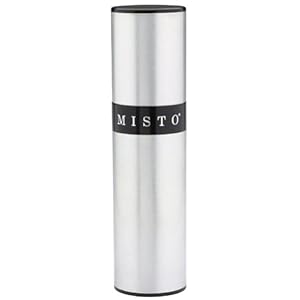
Make Your Own Cooking Spray


Are you still buying PAM, or the equivalent?  In addition to being a waste of a metal can, those nonstick cooking sprays you buy in the store can have some weird ingredients: lecithin (an emulsifier usually derived from soy); a propellant such as food-grade alcohol, nitrous oxide, carbon dioxide or propane; and sometimes even silicone to help promote the formation of a nonstick film.  When I used to use these cooking sprays, I remember that they often left this strange filmy substance around the perimeter of the pan that could not be cleaned off, no matter how much I scrubbed.  Certain pans I owned even recommended not using cooking sprays on the pans, probably for this reason.

Reuseit™ Insulated Lunch Bag: Review and SALE!

Reuseit's large insulated bag pictured
with what I usually put inside it.


For months and months, I took lunch for me and my kids to the park in a backpack.  This arrangement had a number of drawbacks.  I love my Klean Kanteen water bottles for my kids, but the sports cap sometimes would get opened in the bag and then water would drip all through the bag. Also, any food in reusable bags was liable to get smashed.  If we took cheese or other perishables to the park and didn't eat all of it, I usually felt like I had to toss it by the time we got home because it was, by then, lukewarm.  Finally, it was often just annoying to rummage through the large backpack (full of other various items) to find what we wanted.  Several of my mom friends brought their food in insulated bags, and I often looked at those bags a bit enviously, so eventually I decided it was time to try one.

Quiz: Are Cloth Diapers Right for You?


Some people are absolutely sure they want to use cloth diapers and some are just as sure that they will never ever ever use cloth diapers.  I never had any intention of using cloth diapers but ended up switching from disposables to cloth when my first child was one.

If you answer YES to even 5 of the following questions, maybe cloth diapers really are for you.

Quiz: Are Cloth Diapers Right for You?

1. Do you have a baby or are you expecting a baby? 
Cloth diapers are one of your options!

2. Do you feel like you are flushing money down the toilet every time you change a diaper?
Cloth diapers are cheaper than disposables and can be significantly cheaper depending on what kind of cloth diapering system you use and how many children you diaper.  Financial considerations were not enough to get me to switch to cloth, but I can remember days that I had to change my baby's diaper so many times that I was calculating the money lost in my head as I changed his diaper.

3. Are you able to change a dirty diaper without feeling ill?
When I was pregnant, I had to use a swimmer's nose plug to change my kid's diaper because the smell grossed me out so much.  But usually, poop is just poop. That being said I never and I mean never volunteer to change another child's diaper, because I really do not enjoy changing diapers.  And yet I can handle washing cloth diapers. If you have changed over 100 diapers, then you are familiar enough with poop that removing the poop from a cloth diaper (and you have several options for doing so) and putting your cloth diapers in the washer shouldn't be too traumatic.   My mother-in-law washed cloth diapers by hand, and that makes me believe that most people can definitely handle putting cloth diapers in the washing machine.

4. Do you want grandchildren?
One study found that the scrotal temperature of baby boys was higher in a disposable than in cloth.  Some researchers think disposables might partially explain the increase in male infertility in the last several decades.  One hot day (no A/C) I opened my son's diaper and literally felt a wave of heat come out of it.  That's when I really started thinking about using cloth diapers.  How comfortable can it be to have impermeable plastic wrapped around your bottom on a hot day?


5. Do you have misgivings about the ingredients of disposable diapers?  Or, have you ever found little gel beads on your child's bottom and wondered "What the heck are those?"
If you are a bit concerned about all the toxic chemicals in your child's world, then both the known ingredients (such as the Super Absorbent Polymers pictured above) and the undisclosed ingredients (such as the components of the fragrance) of disposable diapers will give you pause.  If you are going to pay attention to the ingredients in any product, it might as well be one of the products that comes in contact with your baby's private parts all day or several times a day (for example, diaper cream, wipes, and diapers).  These considerations were the #1 reason I switched to cloth diapers.


6. Do you feel a little guilty about dumping gallons and gallons of non-degradable plastic as well as human poop that could seep into ground water into landfills?
A little known fact is that all disposable diapers packages have instructions that tell you that you really are supposed to remove the poop from your disposable diapers and flush it down the toilet before throwing your diaper away (rather than putting the poop with the diaper in the garbage, as 99.99% of all disposable diapers do).  Poop belongs in the sewage system, not the garbage dump, where human waste can create public health issues.  Also, you know those disposable diapers aren't going anywhere for millions and gazillions of years, maybe forever.  Some folks think the environmental impact of disposables versus cloth is a wash.  If you take a few simple steps (for example: don't use several extra rinses, use cold/warm water instead of hot, occasionally line-dry, purchase some used diapers, use diapers for multiple children, resell your diapers), I think you can be pretty sure you are leaving a smaller footprint by using cloth diapers.

7. Does your baby leak through her nighttime disposable diaper practically every night?  
Dealing with leaky diapers at night can drive you crazy, especially when you are already sleep-deprived.  I co-sleep with my babies, so they nurse (and pee) A LOT at night.  I tried nighttime disposables (so expensive!), 2 disposable diapers (one on top of the other), changing diapers during the night -- nothing worked consistently until. . . cloth diapers!  You have so many more options with cloth.  I found a solution that worked for me, and now we enjoy dry nights every night.


8. Do you own a washing machine?
Some folks are so dedicated to using cloth that they do so even though they have to lug their cloth diapers to the laundromat or the apartment building's laundry room.  But if you do have your own washing machine, than using cloth diapers can be even more convenient than disposables.  Oh no!  Are you out of diapers?  Just throw a load in the washer instead of packing the kids into the car and driving to the store.

9. Are you daunted and confused by the choices out there for cloth diapers?  
In many ways, the bewildering number of cloth diapering options is the biggest obstacle to using cloth diapers.  Once I found a system that worked for me, I found that using cloth diapers was no more difficult or time-consuming than using disposable diapers.  I also found there were many advantages to using cloth, so much so that when we travel (and use disposables for a week or so), my husband and I are both anxious to get back to using cloth.  If you are thinking of switching to cloth diapers, I recommend asking a cloth-diapering friend or a local baby store to show you in person a few of your cloth diapering options, or you can use one of the many cloth diapering trials offered by online diapering stores to help you decide which styles fit your baby and your lifestyle. For a brief introduction to your cloth diapering choices described in terms any disposable-diaper-using parent can understand, read this post.
 
10. Do you think it is so darn fun to dress your kids in those tiny little clothes and hats and hair ribbons?
Some moms go nuts over all the cute prints and colors of cloth diapers.  Some moms (not me) actually have to control themselves from spending too much money on diapers.  If you love dressing and accessorizing your child, you might love this aspect of cloth diapers.  They are way cuter than disposables.

What do you think?  Are cloth diapers maybe for you?

Eco-novice's Cloth Diapering 101
Cloth Diapers Explained in Disposable-eese
What Do You Do with the POOP???
Cloth Diaper Tutorial - The EASIEST Way to Use a Prefold
Washing Cloth Diapers
Wiping my Baby's Bottom
Why I Love Cloth Diapers
My Favorite Nighttime Cloth Diapers
My Favorite Daytime Cloth Diapers

Other Useful Diapering Resources
Diapers: Cloth, Disposable, Stinky Pails & More (Healthy Child Healthy World)
Quick Tips: Cloth Diapering System (Healthy Child Healthy World)
First Steps: The Diaper Debate (Healthy Child Healthy World)
New to Cloth Diapers? (Jillian's Drawers)


Note: this is an updated version of a post first published July 2010.
Photo credit (top of post): Liz (perspicacious.org)

This post is part of

Eco-novice's Favorite Eco-friendly Lunch Gear


My children aren't yet school-aged, but we pack food nearly every day to eat at the park or on other outings, and my husband often packs a lunch.  We've sampled quite a lot of reusable food gear in the last year.  Here is a rundown of our favorites.  All recommended products have enjoyed heavy use by my family for 6 months or more!

Celeste Blake Designs Gallon-size Reusable Bag Giveaway & Review

Reusable gallon-size bag from Celeste Blake Designs,
$13.95 (incl. shipping)

About 7 months ago, I ran out of quart-size and sandwich-size bag disposable plastic bags simultaneously. As I pulled the last one or two baggies out of the box, I resolved to stop buying disposable baggies and find reusable alternatives to replace them. Since then, I have tried and reviewed numerous reusable food bags, and I am proud to say that I have not purchased any more disposable plastic bags since then.

But. . . I am still using disposable gallon-size bags. Until recently, I didn’t know of a suitable reusable alternative.

CONNECT WITH ME


© 2008-2020 Eco-novice: Going Green Gradually All Rights Reserved

Copyright © Eco-novice | Powered by Blogger

Design by Anders Noren | Blogger Theme by NewBloggerThemes.com