Showing posts with label eat less plastic. Show all posts

Eat Less Plastic: 33 Ways to Keep Plastic Chemicals Out of Your Family's Diet


Plastics, so convenient, so ubiquitous, so problematic. While it's probably impossible to eliminate plastics from your life entirely, you can and should try to keep them out of your food. Harmful plastic chemicals such as BPA and phthalates are in our bodies, and researchers believe they most commonly enter our bodies through ingestion via our mouths. But it's not enough to avoid BPA or other specific plastic chemicals. The absence of an effective toxic chemical policy framework means that toxic plastic chemicals (such as BPA) are often replaced with another untested chemical (BPS), which all too often is later found to be just as problematic (the so-called "toxic treadmill"). The issue is the undisclosed additives. As plastic-free living guru Beth Terry explained in an interview:
The issue is, it is impossible to know if any plastic is safe. In addition to the problems we know about, plastics can contain thousands of possible additives to affect the hardness, or softness, or slippery-ness, and manufacturers don’t disclose what their recipes are. The number on the container tells you what type of plastic it is, but it doesn’t tell you what else has been added to the plastic. If you don’t know what’s in it, you can’t tell what will leach out of it. The additives are not bound to the polymer, and when the plastic is subject to stress (light, heat) it can leach. (source)
As a 2011 study famously demonstrated, almost all commercially available plastics leach endocrine disruptors when subjected to common-use stresses, such as microwaving or the humid heat of the dishwasher. Recent studies have connected plastic chemicals to autistic behaviors, reduced sperm count, irregular heartbeats, and higher blood pressure. In fact, researchers recently concluded that "there is a greater than 99 percent chance that endocrine-disrupting chemicals [including BPA and phthalates, found in plastics] are contributing" to neurological effects (such as attention problems), obesity and diabetes, as well as infertility and other male reproductive disorders.

When trying to keep plastic out of your diet, keep in mind the following:
  • Children are more susceptible to health problems caused by plastic chemicals due to the fact that they consume a greater amount of food relative to their body weight and because of their rapid pace of development. The safety of children's dishware and foods should be top priorities. Because fetuses are also particularly vulnerable, pregnant women too should take particular care to avoid eating plastic. 
  • Fat, salt, acid, heat, UV light all promote the leaching of plastic chemicals into food. This is why if you leave your plastic water bottle in your car on a hot day, your water tastes "plasticky." It is also why canned foods that are acidic (pasta sauce), fatty (coconut milk) or salty (soup) contain higher levels of BPA. Naturally, plastic chemicals more readily migrate into liquid foods as well. This is why I pay special attention to how high fat, salty, acidic, and liquid food products are packaged. 
  • Styrofoam, PVC/ vinyl, PFCs (such as Teflon), and hard clear plastics (originally made with BPA and now the no-better BPS) are especially to be avoided. While all plastics are suspect due to undisclosed ingredients, these plastics are widely accepted to be harmful to human health. 

With those general guidelines in mind, here are 33 specific tips to help you and your family ingest less plastic.

5 Ways to Avoid Toxic Styrofoam


Polystyrene Causes Cancer and Messes with Your Hormones!


Styrofoam and other polystyrene plastics have been enjoying a bit of notoriety this year. Earlier this year styrene (the building block of polystyrene) was finally listed as “reasonably anticipated to be a human carcinogen” by the National Research Council, a designation long fought by the styrene industry. More recently polystyrene, the primary building block of expanded polystyrene foam (a.k.a. styrofoam*) and other plastics, was found to seep estrogen when exposed to heat and UV light. That styrofoam takeout container isn't just carcinogenic. It's messing with your hormones too!

Bad for You, Bad for the Earth


In addition to causing detrimental human health effects, polystyrene products have numerous detrimental effects on the environment. The polystyrene manufacturing process creates large amounts of liquid, solid, and gaseous hazardous waste. Styrene plastic products are almost never recycleable and will persist for hundreds of years in landfills.

Foam litter is notoriously difficult to control. Polystyrene foam breaks apart easily and its lightness allows it to be readily dispersed by the wind, which is especially problematic and expensive for cities that need to limit trash in waterways. In California, styrofoam accounts for 15% of storm drain litter and is the second-most-common type of beach debris. It is also frequently mistaken for food by animals and seabirds. Due to these issues, dozens of cities have banned expanded polystyrene foam all together.

Eventually, I'd love to see this toxic plastic banned everywhere, but until then, here are some ways you can keep polystyrene's toxic chemicals out of your body and the environment.

{Teflon-free} Pumpkin Whole Grain Waffles with Pumpkin Syrup


I Found a Teflon-free Waffle Maker!


Given my deep and abiding love for breakfast foods, some might find it surprising that homemade waffles were not in my regular breakfast rotation. After all, they freeze and toast up so well! Problem is, I ditched Teflon many years ago and I couldn't find a Teflon-free waffle maker anywhere. I had seen cast iron waffle makers, but they were unseasoned, and came with parrafin wax on them (to prevent rusting). In order to use it, you had to melt off the parrafin wax and season it yourself. Sorry, but that's a little too much effort for me. [Now a pre-seasoned cast iron waffle maker, that I would buy in a heartbeat. Are you listening, Lodge Logic???]

At any rate, I had resigned myself to living without waffles. That is, until recently, when my son's umpteenth request for waffles compelled me to half-heartedly google (again) "Teflon-free waffle maker." And, lo and behold, there it was: the Oster DuraCeramic Stainless Steel Flip Waffle Maker. Now, really, I should have done my due diligence and tried to find out more about what the nonstick coating of my waffle maker is made of before purchasing it, but I was just so excited to see a PTFE-free and PFOA-free ceramic-based coating on a waffle maker that I just went ahead and purchased it. (Read Debra Lynn Dodd's take on the coating here.)

Enjoy Superfood Pumpkin Year-round


Since then I have been keeping my freezer well-stocked with my sister Jeanette's Pumpkin Whole Grain Waffles. My 6yo son loves to have these for breakfast, and I love sending him to school with a tummy full of whole grains and pumpkin goodness. We most often eat these with maple syrup, but for even more pumpkin deliciousness, try with pumpkin syrup (recipe follows).

Almost Plastic-free Pizza


I did it! I finally found a tomato sauce jarred in glass that works as a base for my sauce for our Friday night pizza!

Eden Organic's Crushed Tomatoes are thick and just barely chunky ("screen-finished" rather than pureed), and come in several varieties (roasted garlic and onion, sweet basil, plain). I think I like the garlic and onion one the best, but I've tried them all and they all work. I buy them in bulk at Whole Foods every couple of months. I should probably ask Whole Foods about getting the case discount. You can also purchase directly from Eden Organic. One 25 oz. jar costs about $4, but since the jar is almost double the size of a can, I get two weeks' worth of pizza out of it (the sauce lasts fine for at least a week stored in the fridge) and it ends up costing me about the same as the Muir Glen organic tomato sauce in BPA-free cans.

I bought a few other tomato products in glass (Bionaturae) and the less-preferred Tetrapak (Pomi) to try, but I sampled the Eden Organic product first and it worked well and wasn't more expensive so I'm sticking with it. But if I ever run out and use those other kinds, I'll let you know how it goes.

Now the only plastic in my pizza is from the mozzarella cheese. I suppose I could go the Barbara Kingsolver route and make my own mozzarella from the local milk we get in glass jars. But that's not going to happen anytime soon. My next pizza priority will be to make and can pizza sauce I make myself from local organic tomatoes purchased at the farmers market. And someday, in the hopefully not entirely imaginary future, I will make homemade pizza with our own homemade pizza sauce made from homegrown tomatoes. But in the meantime, I'm happy to have found some plastic-free tomatoes.


Friday Night Pizza

[Find my more detailed recipe for homemade pizza with additional photos and instructions in this post.]

Dough 
4.5 cups flour (I use 2 cups white whole wheat and 2.5 cups unbleached white )
2 t kosher salt
1 T yeast
2 cups water

Sauce 
1 can tomato sauce (I use half of a 25 oz. glass jar of Eden Organic's Crushed Tomatoes)
1/2 t oregano
1/2 t rosemary
1/2 to 1 t table salt (I use about 3/4 t salt with no salt added tomato sauce)
1/4 t pepper

Toppings 
16 oz. mozzarella cheese, grated
pepperoni
whatever else you like

Combine flour, salt and yeast, then pour in 2 cups warm water and combine. Knead in more flour until like pizza dough: smooth and not-too-sticky. Return to (dirty) bowl. Allow to rise until double.

Preheat oven to 415. Divide dough into 2 or 3 balls. Roll your pizza dough into a circle using a rolling pin and place on a greased pizza pan. Poke dough with fork all over. Put your dough in the oven for 10-15 minutes until it starts to get golden some places on top. Make the sauce by combining all ingredients.

Divide sauce evenly between crusts. Then add mozzarella, pepperoni, and other toppings. Bake for 5 to 10 more minutes until cheese is fully melted. For an extra crispy crust, use tongs to drag your pizza off the pan directly onto the oven rack and remove pan from the oven after cheese is mostly melted. Allow to bake directly on a lower rack for 2 to 4 minutes, then use tongs to pull off rack back onto pan and remove from oven. 

Allow pizza to cool and slice on wooden cutting board. Enjoy! 

How do you avoid eating plastic?

Related Posts

Popsicle Weather


The weather is heating up where we live and that means it's popsicle weather. I have resisted buying popsicle molds for many years because I didn't want to buy plastic ones, even if they were BPA-free. But I finally found a fabulous stainless steel one: the Freezycup™ Stainless Steel Ice Pop Molds made of high-quality food-grade stainless steel 18-8 (304). The Freezycup™ is made by Life Without Plastic, an amazing Canadian company I first read about on Beth Terry's blog My Plastic-free Life (use dropdown menu in left sidebar to switch from CAN$ to US$).

Each Freezycup™popsicle maker has 4 parts: the popsicle cup or mold, lid, silicone gasket (goes in center of lid and holds stick in place), and reusable bamboo stick. I love that the stick is reusable. We have used our sticks at least 10 times and they still look great. It can be tricky with small ones to keep track of all these parts. My children mostly eat their popsicles outside, so we have chosen a spot where they can set their sticks and lids (with gasket) when they are done. They know if these parts get lost, there will be no more popsicles, and so far that has been plenty of motivation.

It's so hard to say goodbye to BPA

I use a can of tomato sauce every Friday night to make pizza.

I've already taken many steps to avoid BPA:
  • We use stainless steel sippy cups and water bottles instead of plastic ones.
  • We avoid any plastic marked 7, particularly food packaging/ containers and toys.
  • I avoid handling receipts and try to wash my hands afterwards if I do handle one.
  • I have stopped using most canned foods. For example, I bought a pressure cooker and started making beans from scratch.
  • We don't drink canned beverages. 
  • I am suspicious of any clear hard plastic.

But there has long been one hold out in the canned food department: tomatoes. This is somewhat tragic because tomatoes are acidic and thus more likely to involve leaching from the epoxy lining of metal cans. I did can diced tomatoes purchased in bulk at the farmer's market with my lovely friend Heidi a couple summers ago, which effectively replaced my canned diced tomatoes. But I have never stopped using canned tomato sauce (Trader Joe's organic tomato sauce, if you really want to know). And now that I am making pizza every single Friday night, I am using a lot of canned tomato sauce. One can per week to be exact.

Wait. Why Am I Doing This?

A few weeks ago when I made honey whole wheat bread, I got distracted -- a regular occurrence in a house with three children under 5 -- and I let the bread rise too long in the loaf pans. And so the dough fell. I walked into the kitchen and saw this:


How did that make me feel? Really, really bummed and more than a little bit ticked. I thought of how I had carefully waited for a summer day that wasn't too hot for baking, a day when I could begin the bread in the afternoon so I could bake it in the evening when things start to cool down. I couldn't help but obsess about the freshly ground wheat wasted, the local honey wasted, but most of all, I agonized about my precious time wasted. To say that I don't like it when things don't go as planned -- well, that would be an understatement. I'm not really a roll-with-the-punches kind of girl.

Then just yesterday I was making my bread, and I noticed that the second batch hadn't risen in more than an hour. I had forgotten the yeast. Dang it!

Another day, I forgot the salt.

Moments like these, I find myself wondering, why am I doing this? Why am I making bread when I can buy it at the store? Why when I have so very little time to accomplish anything? Why am I torturing myself? Why? Why? Why?

Homemade Yogurt

Homemade yogurt: delicious with homemade granola

Homemade yogurt is one of those things that is so easy... once you figure it out.  There are about a gazillion posts and web pages about how to make homemade yogurt. And all are determined to convince you how very simple and doable it is. And yet they all give slightly different directions. And often give pseudo-scientific reasons for doing so (e.g., if you add too much starter the bacteria in the culture fights with each other and won't work correctly). The problem is the number of variables involved:
  • Milk (whole, 2%, skim, raw, pasteurized, goat, cow, sheep)
  • Type of starter (brand of yogurt, greek or regular, flavored or not, powdered)
  • Ratio of starter to milk
  • Method of heating milk
  • Temperature milk needs to reach to kill vagrant bacteria
  • Temperature milk needs to cool to before adding starter
  • Other ingredients (powdered milk, gelatin, flavorings, sweetener)
  • Incubation temperature 
  • Length of incubation period 
  • Method of incubation 

The Perfect Child's Cup

The Sanctus Mundo 8 oz. Stainless Steel cup.
Available from MightyNest for $7.95

During the last several years, we have been trying to eat and drink less plastic by seeking alternatives to plastic dishwarefood storage, cookware and bakeware.  Although we've been using stainless steel sippy cups and water bottles for years, a suitable alternative to the plastic child's drinking cup has long eluded me.  Until a month ago, my children were almost exclusively using IKEA polypropylene cups for their drinking cups.  This practice violated several of my own plastic rules, including avoiding using plastics with food (particularly liquids, which have the potential for greater leaching); avoiding using plastic children's products; and never putting plastic through the dishwasher.  We always put our IKEA cups through the dishwasher, because I am just far too lazy to hand wash several plastic cups every single day.

Plastic-free and BPA-free Feeding Gear for Babies and Kids

We use stoneware, glass, stainless steel and plastic feeding gear for our kids.  Almost all the plastic dining ware is polypropylene (#5) plastic.


Born Free - 9 oz Wide Neck Glass Bottle 2 Pack


Bottles:  Born Free Glass Bottles
I got tired of hand washing the plastic bottles we had (I try not to put plastic in my dishwasher), so I bought a couple Born-free glass baby bottles instead.  Several small parts that attach the nipple to the glass bottom (valve, ring) are plastic, but the bottle is mostly glass.  The nipple, like most bottle nipples, is silicone.  We like the Born Free bottles, but, honestly, have hardly used bottles at all (one or two feedings a week tops in the first few months).  I'm not sure how it would be using them a much larger percentage of the time. You can buy silicone sleeves for them so they aren't so breakable.  Several other brands make glass bottles now too.  I did pump my breast milk into Medela's BPA-free plastic bottles, but stored and reheated the milk only in glass, and hand washed the plastic bottles.  It's really tough to get around plastic when you bottle feed.

10 Reasons that Breastmilk is Green


I'm still nursing my 20-month-old.  I'm sure some will think this is a very long time (perhaps even too long), while others will think it is a drop in the bucket.  [Twenty months is a long time by U.S. standards, but not by world standards. The WHO recommends breastfeeding for "up to two years of age or beyond."]  At any rate, I've been thinking about all the ways that breastfeeding is green, even though this isn't why I breastfeed.  I'm sensitive to the fact that not everyone is able to breastfeed exclusively, but no matter how much or how little you breastfeed, breastfeeding helps you, your baby, and the earth!  If you are pregnant and thinking about breastfeeding, I encourage you to get all the support you need to make breastfeeding work for you and your baby.

Ten Ways Breastfeeding is Eco-friendly
  1. Local -- folks, it doesn't get any more local than this
  2. Produced using renewable resources
  3. No energy spent on shipping
  4. No energy used to store, refrigerate, preserve
  5. No packaging (no concerns about BPA-lined cans!)
  6. No need to buy a delivery system such as bottles and nipples (no worries about chemicals leaching from plastic into milk)
  7. Reduces need for menstrual supplies and birth control (yes, I just used the word menstrual - still with me?)
  8. Reduces need for health care for baby
  9. Reduces need for health care for mom
  10. Breastmilk poop washes easily out of cloth diapers

Click HERE or HERE to read all about the benefits of breastfeeding.

Related Posts


Would you like more ideas and tips about Going Green Gradually? Sign up for my free email subscription to get each of my posts delivered to your inbox (I usually post one or two times a week). You can also follow me on FacebookGoogle PlusPinterestTwitter, or with your favorite RSS Reader. I hope to see you again soon!

photo credit: Caitlinator via photopincc

Stainless Steel Sippy Cups

Can you find 3 stainless steel 
sippy cups in this photo?

I will be posting about all of my children's feeding gear soon, but I decided that the stainless steel sippy cups merited their own post.  My 2 kids (ages 3.5 and 1.5) use sippy cups for water and milk every day.  I have tried Klean Kanteen, Safe Sippy, and Eco Vessel sippy cups.

Eat Less Plastic


Recent findings about plastics:
  • Lest you feel content to simply avoid BPA and phthalates (both hormone disruptors and long-suspected of toxicity to humans, particularly fetuses and children), another recent study found: 

Teflon-Free Cookware and Bakeware


[This post was updated September 2015.]

Not so long ago, several of my favorite pieces of cookware had a nonstick coating.  But most nonstick coatings contain Teflon, and Teflon is associated with "smaller birth weight and size in newborn babies, elevated cholesterol, abnormal thyroid hormone levels, liver inflammation, and weaker immune defense against disease," according to the Environmental Working Group.  Some folks think as long as you don't heat an empty or damaged Teflon pan, you are doing all right.  

I personally have a general avoidance policy regarding plastic and food, but I try especially hard to avoid heating food in plastic. Although I decided early in my journey to green that I didn't want to cook or bake with plastic, it took me years to phase out all my nonstick stuff.  It's been hard to say goodbye to Mr. Teflon.  Today I am proud to say that I no longer use any nonstick cookware or bakeware.  

Etsy Reusable Sandwich Bags Giveaway and Review (12 Stores, 6 Winners)

After reading this post, you will never have to buy Ziploc bags again. 

Since I gave up disposable baggies, I have reviewed a few commercially- made reusable food bags and wraps.  But as a devoted Etsy fan, I decided I also should feature some Etsy products.  Go on Etsy’s website and search for sandwich or snack bags and you quickly discover that there are A LOT of Etsy stores selling reusable food bags.   All those sellers, all those materials and fabrics, all those designs and prices – it can be overwhelming! 

Lucky for you, I have spent hours browsing these stores and now present to you some of my favorites.  I have personally tested bags from each of the stores (each store sent me at least one bag free for review).  These stores were selected for their competitive prices, awesome features, and lovely fabrics.  I also deliberately included stores that would demonstrate the variety of designs available.  If you don't have an Etsy account, you might want to make one now, so you can add some or all of the stores below to your "favorites."

Do I Need to Become Vegan to Live Plastic-Free?


As I did my grocery shopping this week, I realized how much plastic packaging is involved in the selling of animal products.  My raw meat comes on a styrofoam tray and shrink-wrapped plastic.  My deli meat comes in a plastic bag.  My yogurt comes in plastic cartons.  My milk comes in plastic jugs.  My blocks of cheese come shrink-wrapped in plastic too.  My buttermilk is in a plastic-lined Tetra-pak container.  At least my butter is plastic-free (I think).  Even if I were vegan, it would be difficult to eat entirely plastic-free, but unless you raise your own livestock, I think it is well nigh unto impossible to live plastic-free while eating meat and cheese.

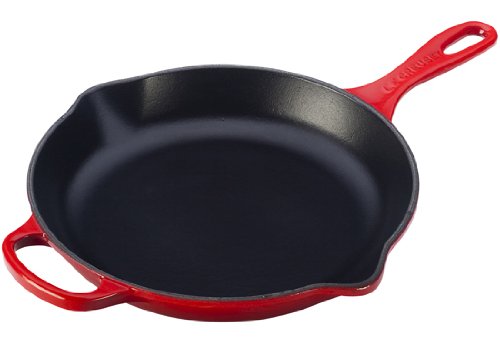
Goodbye, Teflon. Hello, Le Creuset.


Making pancakes with Le Creuset enameled cast iron skillet (left)
and Lodge Logic preseasoned cast iron griddle (right).

Raise your hand if you own cookware with a Teflon nonstick coating.
You're not alone.  Nonstick cookware accounts for about 60 percent of all cookware sales.


But there are reasons to do without it.  Particularly if you are trying to not eat plastic.  Even the new-fangled "green" pans have their issues.  It took me many years, but I now no longer use any cookware or bakeware with nonstick coatings.  The final step in this long, long journey I took just a few months ago when I said goodbye to my Teflon skillet.  My 10" Cuisinart nonstick skillet, which I used every other day to make scrambled eggs.

My Plastic Rules


As part of Plastic-Free February (a.k.a. Plastic Awareness Month), I thought I would share with you the Plastic Rules I use to help guide my plastic purchases and usage.  Just like Rodale's Plastic-Free Rules, I break these rules plenty often.  These rules are based on what I have read about using plastic safely, and especially about limiting my children's exposure to plastics.  

My Plastic-Filled Week


Well, I knew my week wasn't going to be Plastic Free.  That's why I also like my alternate title: Plastic Awareness February.  Makes me feel less bad about myself.  Here is the rundown of my week.


Saturday: Farmer's Market
There are only 2 organic vendors at my Farmer's Market.  One sells several things already bagged in plastic.  I buy the baby lettuce and spinach in the plastic bags, but decide not to get the bagged mushrooms.  He also has unbagged mushrooms, but I don't have enough bags to get the variety I want.  Everything else I buy I put in my own reusable mesh and cotton produce bags.  Next week I will bring even more bags so I can buy 3 different varieties of mushrooms for my farfalle with mushrooms and peas.  I could ask the vendor about bringing some non-plastic greens, but I don't feel like bugging them to do this when I have plenty of other ways to eliminate plastic in my food that don't inconvenience others.

CONNECT WITH ME


© 2008-2020 Eco-novice: Going Green Gradually All Rights Reserved

Copyright © Eco-novice | Powered by Blogger

Design by Anders Noren | Blogger Theme by NewBloggerThemes.com