Showing posts with label Plastic-Free. Show all posts

Our Favorite Wooden Block Sets: Open-ended Play for All Ages


Wooden blocks are well-used and well-loved at my house. We use them to build towers, houses, words, villages, roads, skyscrapers, boats, dollhouses and animal villages. We use them to count, weigh, build, balance, measure, and spell. Wooden blocks are never outgrown and never go out of style. They allow adults and all ages of kids to create and play together. My children (now 10, 8, and 6) still play with ours blocks constantly. These are the sets I plan to save and pass down to the grandchildren.

Cheap Plastic Toys Don't Inspire Ocean Conservation


Dear Monterey Bay Aquarium Manager of Merchandising,

We love the Monterey Bay Aquarium! Although the membership cost was a little steep for our family, my husband and I agreed that in addition to wanting our family to visit regularly, we also felt great about our money supporting the Aquarium's awesome mission: to inspire conservation of the oceans.

Through our regular visits, my husband and children and I are all learning a ton about ocean life, and most certainly developing a deeper appreciation of the ocean: its beauty, its enormity, its mystery, its diversity, its fragility. After visiting the Aquarium, our next trip to the library often results in us leaving with a tall stack of books about aquatic critters.

Almost Plastic-free Pizza


I did it! I finally found a tomato sauce jarred in glass that works as a base for my sauce for our Friday night pizza!

Eden Organic's Crushed Tomatoes are thick and just barely chunky ("screen-finished" rather than pureed), and come in several varieties (roasted garlic and onion, sweet basil, plain). I think I like the garlic and onion one the best, but I've tried them all and they all work. I buy them in bulk at Whole Foods every couple of months. I should probably ask Whole Foods about getting the case discount. You can also purchase directly from Eden Organic. One 25 oz. jar costs about $4, but since the jar is almost double the size of a can, I get two weeks' worth of pizza out of it (the sauce lasts fine for at least a week stored in the fridge) and it ends up costing me about the same as the Muir Glen organic tomato sauce in BPA-free cans.

I bought a few other tomato products in glass (Bionaturae) and the less-preferred Tetrapak (Pomi) to try, but I sampled the Eden Organic product first and it worked well and wasn't more expensive so I'm sticking with it. But if I ever run out and use those other kinds, I'll let you know how it goes.

Now the only plastic in my pizza is from the mozzarella cheese. I suppose I could go the Barbara Kingsolver route and make my own mozzarella from the local milk we get in glass jars. But that's not going to happen anytime soon. My next pizza priority will be to make and can pizza sauce I make myself from local organic tomatoes purchased at the farmers market. And someday, in the hopefully not entirely imaginary future, I will make homemade pizza with our own homemade pizza sauce made from homegrown tomatoes. But in the meantime, I'm happy to have found some plastic-free tomatoes.


Friday Night Pizza

[Find my more detailed recipe for homemade pizza with additional photos and instructions in this post.]

Dough 
4.5 cups flour (I use 2 cups white whole wheat and 2.5 cups unbleached white )
2 t kosher salt
1 T yeast
2 cups water

Sauce 
1 can tomato sauce (I use half of a 25 oz. glass jar of Eden Organic's Crushed Tomatoes)
1/2 t oregano
1/2 t rosemary
1/2 to 1 t table salt (I use about 3/4 t salt with no salt added tomato sauce)
1/4 t pepper

Toppings 
16 oz. mozzarella cheese, grated
pepperoni
whatever else you like

Combine flour, salt and yeast, then pour in 2 cups warm water and combine. Knead in more flour until like pizza dough: smooth and not-too-sticky. Return to (dirty) bowl. Allow to rise until double.

Preheat oven to 415. Divide dough into 2 or 3 balls. Roll your pizza dough into a circle using a rolling pin and place on a greased pizza pan. Poke dough with fork all over. Put your dough in the oven for 10-15 minutes until it starts to get golden some places on top. Make the sauce by combining all ingredients.

Divide sauce evenly between crusts. Then add mozzarella, pepperoni, and other toppings. Bake for 5 to 10 more minutes until cheese is fully melted. For an extra crispy crust, use tongs to drag your pizza off the pan directly onto the oven rack and remove pan from the oven after cheese is mostly melted. Allow to bake directly on a lower rack for 2 to 4 minutes, then use tongs to pull off rack back onto pan and remove from oven. 

Allow pizza to cool and slice on wooden cutting board. Enjoy! 

How do you avoid eating plastic?

Related Posts

What's So Bad About Vinyl Plastic (PVC)?


I have a general avoidance policy towards plastic, particularly disposable plastic. I seek less toxic alternatives to plastics whenever I can. But I make an extra special effort to avoid certain plastics, including polyvinyl chloride (PVC), also known as vinyl or the #3 plastic. The Center for Health, Environment and Justice (CHEJ) calls PVC "the most toxic plastic for children’s health and the environment."

What makes PVC uniquely toxic? 


In a nutshell, PVC plastic is uniquely toxic among plastics because of its highly toxic ingredients which readily migrate into the environment during its production, its use, and its disposal.


Toxic Ingredients

Pure PVC plastic is 57% chlorine, a toxic substance whose production generates substantial pollution (see below). PVC plastic is the only plastic made with chlorine. In addition, PVC plastic requires toxic additives, including heavy metals such as lead, endocrine-disrupting phthalates, and toxic flame retardants, in order to be made into stable and usable consumer products. These additives are released during both the use and disposal of PVC products.

Toxic Production


A basic building block of polyvinyl chloride is chlorine, and chlorine production releases dioxins into the environment.
  • According to CHEJ, dioxins are "a family of highly toxic chemicals that are known to cause cancer, reproductive, developmental and immune problems." 
  • Dioxin has been classified as a known human carcinogen by the International Agency for Research on Cancer (part of WHO) and the U.S. National Toxicology Program. 
  • Some scientists assert that there is no safe level of dioxin exposure for humans. 
  • Dioxins are persistent and bioaccumulative. Most human exposure is through food, mainly meat, dairy products, fish and shellfish (dioxins concentrate in the fatty tissue of animals).
  • In addition to dioxin, chlorine production also results in mercury emissions and asbestos waste. 
  • Communities surrounding PVC plants are particularly susceptible to the toxic chemical pollution from PVC production.  

Toxic Use


The toxic additives in vinyl readily leach and migrate out of PVC products. For example:
  • Merely handling a binder made with PVC stabilized by lead can result in lead exposure. The lead in the PVC migrates to the surface where it is readily picked up by your hand and then transferred to the mouth. 
  • The phthalates added to make soft and pliable vinyl products, such as shower curtains and children's lunch bags, easily migrate or off-gas, making them easy to inhale or ingest
  • Toxic tris flame retardants are added to PVC products such as vinyl flooring and are released as off-gassing occurs from the vinyl. 
  • According to CHEJ, "Scientists have found certain vinyl chemicals linked to asthma, cancer, birth defects, learning and developmental disabilities, obesity, diabetes and other preventable chronic diseases on the rise." 

Toxic Disposal


Whether a PVC product ends up in an incinerator, landfill, or recycling center at the end of its lifespan, PVC is bad news.
  • When garbage is incinerated (still a method of waste disposal in many states), additional dioxins are released into the environment. Dioxins are also released due to the numerous accidental fires that burn buildings and vehicles, two sectors that use substantial amounts of PVC. 
  • Many PVC additives, including phthalates and heavy metals such as lead, slowly leach out of PVC plastics over time when placed in a landfill (many of which are unlined), eventually contaminating ground and surface water. 
  • Vinyl is the least recyclable plastic because of the diversity of additives used to make different types of PVC products. In addition, when PVC-products are accidentally mixed with non-chlorine plastics, they contaminate the entire recycling process.
  • According to a 2004 CHEJ report, "Non-durable (short-lived) products account for more than 70% of PVC disposed in municipal solid waste in the U.S."

Avoiding PVC


Unfortunately, PVC can be difficult to avoid because it's is one of the most widely used plastics and it turns up everywhere. The good news is that more and more alternatives to vinyl products are becoming available. Check out these posts that describe and review PVC-free:

I'll be discussing additional PVC-free alternatives in upcoming posts.


Sources/ Further Reading


Would you like more ideas and tips about Going Green Gradually? Sign up for my free email subscription to get each of my posts delivered to your inbox (I usually post one or two times a week). You can also follow me on Facebook, Google Plus, Pinterest, Twitter, or with your favorite RSS Reader. I hope to see you again soon!

Disclosure: This post may contain affiliate links. Your purchase via these links helps support my blog. Thank you for your support. Read my full disclosure policy here.

Popsicle Weather


The weather is heating up where we live and that means it's popsicle weather. I have resisted buying popsicle molds for many years because I didn't want to buy plastic ones, even if they were BPA-free. But I finally found a fabulous stainless steel one: the Freezycup™ Stainless Steel Ice Pop Molds made of high-quality food-grade stainless steel 18-8 (304). The Freezycup™ is made by Life Without Plastic, an amazing Canadian company I first read about on Beth Terry's blog My Plastic-free Life (use dropdown menu in left sidebar to switch from CAN$ to US$).

Each Freezycup™popsicle maker has 4 parts: the popsicle cup or mold, lid, silicone gasket (goes in center of lid and holds stick in place), and reusable bamboo stick. I love that the stick is reusable. We have used our sticks at least 10 times and they still look great. It can be tricky with small ones to keep track of all these parts. My children mostly eat their popsicles outside, so we have chosen a spot where they can set their sticks and lids (with gasket) when they are done. They know if these parts get lost, there will be no more popsicles, and so far that has been plenty of motivation.

The Friday Question: How Do You Store Raw Meat?

Ground turkey packaged straight from the
butcher counter into my Pyrex container.


Although I aspire to being disposable-plastic-free, I am far from there, particularly in the realm of food. But I do try to draw a line somewhere, and the line I have drawn is this: I do not buy meat packaged on styrofoam trays. Not even the organic ground turkey at Costco, even though it is quite a good price for organic ground turkey.

When I decided to stop purchasing meat packaged in styrofoam, I resolved to instead buy ground turkey at the meat counter in Whole Foods, so I could have it packaged in my own reusable glass Pyrex containers. After using the meat, I could just put the Pyrex through the dishwasher and store until my next meat purchase. I could also use them for any other raw meat I bought at Whole Foods.

Continue reading at The Green Phone Booth


Favorite Sources for Play Food and Dishes


One of my favorite classic toys is a wooden play kitchen, along with the accompanying play dishes and play food. I wrote about our wood play kitchen earlier. We still love it. My only regret is not buying it sooner. I bought it just last year, when I should have purchased it when my first child was a year old. My one-year-old plays with the kitchen the most of all my kids. She is endlessly fascinated by opening and closing the doors, by putting things inside and taking them back out, by dropping things through the sink hole and then opening the door to find them inside.


Here are some of our favorite sources for play food and play dishes.

Eco-Ditty Organic Cotton Sandwich Bags


As Eco-novice readers know, I love reusable bags! I'm happy to say that I haven't purchased a box of disposable plastic baggies in several years. I have reusable bags in many different shapes and sizes and made with many different materials.

Recently we have been test driving Eco-ditty's reusable sandwich and snack bags. Eco-ditty food bags are
  • Made in Colorado
  • Made with 100% organic cotton fabrics (GOTS certified and fair trade)
  • Available in a variety of attractive and stylish fabrics
  • Have an undyed organic cotton liner -- no synthetics, plastics or chemicals touching your food
  • Printed with low-impact inks and dyes
  • Hook and loop closure
  • Washable by hand, machine or dishwasher (line dry is recommended -- although I accidentally dried mine in the dryer and they are still fine)

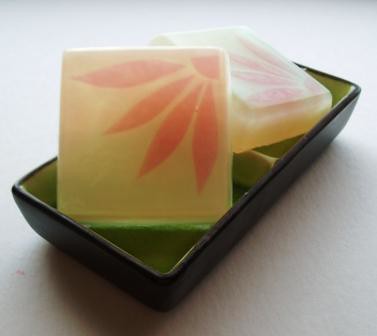
One Small Step: Bar Soap in One Bathroom


About a year ago I switched to a shampoo bar. My husband too. It has great natural ingredients, is handmade by an Etsy shop, and requires minimal packaging. My soap (from Dress Green) came wrapped in tissue paper in a cardboard box.

So I was thinking about how lame it is that we still use liquid hand soap at our house. Which means that, along with the actual soap, I'm paying for a whole lot of water and a non-reusable plastic bottle. So why haven't I switched to bar soap (which is arguably a smaller step than switching to a shampoo bar)?

My kids. I mean, shoot, I finally just trained them to wash their hands. And I've trained them to do it using liquid soap, and I'm loathe to disrupt the conditions under which they will actually wash their hands without copious amounts of bribery or nagging.

But I had an idea. I switched from liquid soap to bar soap in just one location: the master bathroom. My bathroom. And since I wash my hands more often than anyone else (with diaper changes and bottom wiping and all manner of other dirty tasks), the bar soap gets plenty of use. And I am noticing how very, very long the bar soap lasts in comparison to the liquid soap. Of course all the frugalistas out there know that bar soap is much, much cheaper than liquid soap. With all that extra dough I can to afford to spring for the deluxo natural organic essential oils shea butter moisturizing handmade eco-friendly packaging bar of soap. Personally, I like Whole Foods french milled organic lemon verbena bar.

So now every once in a while I get my kids to wash their hands in my bathroom. They need a little more coaching on how to use the bar soap, but they can do it. My kids sometimes use WAY too much liquid soap (they love to create a sink full of bubbles), so that's another reason to make the switch to bar soap with them. I'll be honest, though. I'm not really running in that direction. I think I'll just keep helping them wash their hands with the bar soap in my bathroom every now and then until it's no big deal.

What about germs? Don't worry. People have already worried about that, and it's not an issue. Nonetheless, I can already tell you the last place I'll be switching to bar soap is the kitchen.

What about you? Are you using bar soap? Could you change from liquid soap to bar soap in one location in your home?

Photo credit: soapylovedeb


This post is part of
Frugal Friday

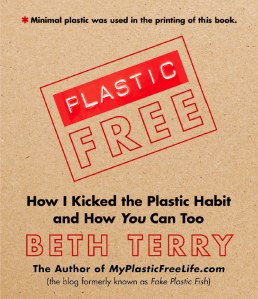
Q & A with Beth Terry, Author of Plastic Free {Giveaway}


One of my favorite resources for plastic-free living is Beth Terry's website My Plastic-free Life. I frequently search her blog or consult her Plastic-free Guide when trying to reduce my plastic consumption. Now Beth has published a book and I am thrilled to be able to offer you the chance to win a copy. Beth Terry's new book Plastic Free: How I Kicked the Plastic Habit and How You Can Too is one of the best green books I've seen. This book combines convincing explanations of the problems with plastic with incredibly comprehensive information regarding plastic alternatives (the book is over 300 pages!). Some of my favorite parts are the inspirational bios of Beth's heroes and the action item checklists at the end of chapters. I love a good action item checklist. 

I recently had a chance to ask Beth a few questions about her book.


Best Bib Ever: Giveaway and Review

Best Bib Ever from kidsstore ($19.95 + $3.00 shipping)

My nearly 2-year-old loves to feed herself but has not always been fond of wearing a bib.  About 9 months ago, she started tearing off her bib 0.5 seconds after I got the Velcro done up at her neck every single time I put it on.  I did try once seeing if I could wear her down by putting on the bib over and over again each time she tore it off, but, in the end, she won that battle of the wills.  I tried various solutions.  The most effective was putting a too-big shirt I didn't care about over her clothes.  But she hated this and it was annoying to put on and take off.  So mostly, for the last many months, she has worn no bib. In addition to staining her every shirt, this has also meant that rice, couscous, and quinoa ended up in every nook and cranny of her body as well as her booster seat.


10 Reasons that Breastmilk is Green


I'm still nursing my 20-month-old.  I'm sure some will think this is a very long time (perhaps even too long), while others will think it is a drop in the bucket.  [Twenty months is a long time by U.S. standards, but not by world standards. The WHO recommends breastfeeding for "up to two years of age or beyond."]  At any rate, I've been thinking about all the ways that breastfeeding is green, even though this isn't why I breastfeed.  I'm sensitive to the fact that not everyone is able to breastfeed exclusively, but no matter how much or how little you breastfeed, breastfeeding helps you, your baby, and the earth!  If you are pregnant and thinking about breastfeeding, I encourage you to get all the support you need to make breastfeeding work for you and your baby.

Ten Ways Breastfeeding is Eco-friendly
  1. Local -- folks, it doesn't get any more local than this
  2. Produced using renewable resources
  3. No energy spent on shipping
  4. No energy used to store, refrigerate, preserve
  5. No packaging (no concerns about BPA-lined cans!)
  6. No need to buy a delivery system such as bottles and nipples (no worries about chemicals leaching from plastic into milk)
  7. Reduces need for menstrual supplies and birth control (yes, I just used the word menstrual - still with me?)
  8. Reduces need for health care for baby
  9. Reduces need for health care for mom
  10. Breastmilk poop washes easily out of cloth diapers

Click HERE or HERE to read all about the benefits of breastfeeding.

Related Posts


Would you like more ideas and tips about Going Green Gradually? Sign up for my free email subscription to get each of my posts delivered to your inbox (I usually post one or two times a week). You can also follow me on FacebookGoogle PlusPinterestTwitter, or with your favorite RSS Reader. I hope to see you again soon!

photo credit: Caitlinator via photopincc

Eco-novice's Guide to Reusable Produce and Shopping Bags


Happy Earth Day!


First, a few facts about single-use plastic bags:
  • It is estimated that worldwide plastic bag consumption falls between 500 billion and 1 trillion bags annually. That breaks down to almost 1 million every minute.
  • The average family accumulates 60 plastic bags in only 4 trips to the grocery store.
  • Only  0.5% to 3% of all bags winds up recycled.
  • Plastic bags are the second-most common type of ocean refuse, after cigarette butts .
  • A single plastic bag can take up to 1,000 years to degrade.
  • When plastics break down, they don't biodegrade; they photodegrade. This means the materials break down to smaller fragments which readily soak up toxins. They then contaminate soil, waterways, and animals upon digestion.

I wrote about a few of my Earth Day Resolutions last week. One of my resolutions is to stop using single-use plastic produce and shopping bags. I've tested out a number of bags over the last year, and will now share my budding expertise with all of you.

Eat Less Plastic


Recent findings about plastics:
  • Lest you feel content to simply avoid BPA and phthalates (both hormone disruptors and long-suspected of toxicity to humans, particularly fetuses and children), another recent study found: 

CONNECT WITH ME


© 2008-2020 Eco-novice: Going Green Gradually All Rights Reserved

Copyright © Eco-novice | Powered by Blogger

Design by Anders Noren | Blogger Theme by NewBloggerThemes.com