Sweets and Treats I Let My Kids Eat


Halloween is just a few days away and I've been making my preparations for the Switch Witch's visit. My children leave all their candy for the Switch Witch on Halloween night, and in return she leaves them a gift and a small quantity of better (less bad) candy. I've resigned myself to the fact that my children will get lots of extra sugar on many occasions and holidays throughout the year, but I'd like to avoid feeding them the food additives and other weird ingredients that often accompany the sugar. Ingredients such as:

I also like to avoid chocolate produced by child slave labor (pretty much all chocolate in mainstream candy, sadly). Yes, I do realize, I'm sucking all the joy out of eating candy.

Here are a few of the treats I let my kids eat:

I actually have some of these treats on hand at all times, because I've learned that people love to throw candy and treats at children at all times of the year, and I always need to be ready to make an exchange.

But I wonder how long I'll be able to keep this up. 

If you have older kids or teenagers, how do handle Halloween and other occasions filled with candy (Easter, Valentines, etc.)?

And on a related note, there is the dilemma of what to do with the conventional candy I collect from my kids. If you have a solution for that, click over and comment on this week's Green Phone Booth post.

Related Posts


Are you interested in Going Green Gradually? Sign up for my free email subscription to get each of my posts delivered to your inbox (I usually post two or three times a week). You can also follow me on FacebookTwitter, or with your favorite RSS Reader. I hope to see you again soon!


Disclosure: This post contains Amazon affiliate links. Your purchase via these links helps support my blog. Thank you for your support. Read my full disclosure policy here.

The Poop Report: Diapering and Pottying at 21 Months


Sometime in the last month of so, I started to think of my 21-month-old toddler as more or less potty trained. Or, at least, I'm no longer really making any active effort to train her. Here are some reasons why:
  • She used a toilet in a public restroom (with my assistance, of course) two days in a row.
  • She regularly announces that she needs to pee and poop and then goes to the bathroom with me.
  • She is always dry in the morning and after naps.
  • She almost never has an accident outside of the house. I can't remember the last time we had to restock the back-up underwear and pants in my van.
  • She has taken off her underpants and used the potty by herself (although this is still an infrequent occurrence).
  • We often go more than a week without washing cloth diapers (mostly training pants/underwear and wipes these days).

She still has accidents regularly. I'm going to guesstimate 2 to 5 a week. The main reasons for accidents are:
  • She needs to poop and doesn't want to. I have learned that when my daughter refuses to pee even though I know she needs to go (for example, it's 2 hours after she woke up dry from a nap), it's probably because she needs to poop and doesn't want to. I have to pull out all the stops to get her on the potty in these situations.
  • She's playing outside. Usually I'm not outside with her, but sometimes even when I am. For some reason, she just feels A-OK about peeing in her pants in the great outdoors. When I remember, I try to get her to use the potty before playing outside. A few times she has taken off her shoes and come inside to tell me she needed to go, but that is (not surprisingly) very rare.

Almost Plastic-free Pizza


I did it! I finally found a tomato sauce jarred in glass that works as a base for my sauce for our Friday night pizza!

Eden Organic's Crushed Tomatoes are thick and just barely chunky ("screen-finished" rather than pureed), and come in several varieties (roasted garlic and onion, sweet basil, plain). I think I like the garlic and onion one the best, but I've tried them all and they all work. I buy them in bulk at Whole Foods every couple of months. I should probably ask Whole Foods about getting the case discount. You can also purchase directly from Eden Organic. One 25 oz. jar costs about $4, but since the jar is almost double the size of a can, I get two weeks' worth of pizza out of it (the sauce lasts fine for at least a week stored in the fridge) and it ends up costing me about the same as the Muir Glen organic tomato sauce in BPA-free cans.

I bought a few other tomato products in glass (Bionaturae) and the less-preferred Tetrapak (Pomi) to try, but I sampled the Eden Organic product first and it worked well and wasn't more expensive so I'm sticking with it. But if I ever run out and use those other kinds, I'll let you know how it goes.

Now the only plastic in my pizza is from the mozzarella cheese. I suppose I could go the Barbara Kingsolver route and make my own mozzarella from the local milk we get in glass jars. But that's not going to happen anytime soon. My next pizza priority will be to make and can pizza sauce I make myself from local organic tomatoes purchased at the farmers market. And someday, in the hopefully not entirely imaginary future, I will make homemade pizza with our own homemade pizza sauce made from homegrown tomatoes. But in the meantime, I'm happy to have found some plastic-free tomatoes.


Friday Night Pizza

[Find my more detailed recipe for homemade pizza with additional photos and instructions in this post.]

Dough 
4.5 cups flour (I use 2 cups white whole wheat and 2.5 cups unbleached white )
2 t kosher salt
1 T yeast
2 cups water

Sauce 
1 can tomato sauce (I use half of a 25 oz. glass jar of Eden Organic's Crushed Tomatoes)
1/2 t oregano
1/2 t rosemary
1/2 to 1 t table salt (I use about 3/4 t salt with no salt added tomato sauce)
1/4 t pepper

Toppings 
16 oz. mozzarella cheese, grated
pepperoni
whatever else you like

Combine flour, salt and yeast, then pour in 2 cups warm water and combine. Knead in more flour until like pizza dough: smooth and not-too-sticky. Return to (dirty) bowl. Allow to rise until double.

Preheat oven to 415. Divide dough into 2 or 3 balls. Roll your pizza dough into a circle using a rolling pin and place on a greased pizza pan. Poke dough with fork all over. Put your dough in the oven for 10-15 minutes until it starts to get golden some places on top. Make the sauce by combining all ingredients.

Divide sauce evenly between crusts. Then add mozzarella, pepperoni, and other toppings. Bake for 5 to 10 more minutes until cheese is fully melted. For an extra crispy crust, use tongs to drag your pizza off the pan directly onto the oven rack and remove pan from the oven after cheese is mostly melted. Allow to bake directly on a lower rack for 2 to 4 minutes, then use tongs to pull off rack back onto pan and remove from oven. 

Allow pizza to cool and slice on wooden cutting board. Enjoy! 

How do you avoid eating plastic?

Related Posts

Absorbent Yet Trim: Hanna Andersson Training Unders


My 22-month-old in Hanna Andersson XS Training Unders in organic cotton

Now that I am nearing the end of our days using training pants, I decided it was time to give those Hanna Andersson Training Unders in organic cotton a try. Guess what? They're great! Too bad I didn't invest in a stash when my first child was potty training. They cost $26 for 3 (solid colors) or $28 for 3 (patterns) and are made of 100% organic cotton, certified by Oeko-Tex Standard 100, an excellent third party certification for textiles.

Hanna Andersson Training Unders look a lot like Gerber training pants in photos, but they are so much better.

(Note: You can read an in depth comparison of the five other styles of training pants we've tried here.)


Why We Love Hanna Andersson Training Unders


  • Well made. I'm impressed with the quality of materials and construction. 
  • Organic cotton. Conventional cotton accounts for 10% of total pesticide use and nearly 25% of insecticides use worldwide. Organic cotton is much better for the environment. I don't buy much organic cotton clothing for my kids (they wear mostly second-hand), but I do buy organic pajamas and I'm moving towards organic underclothing. I figure they wear their pajamas for about 50% of each day and their underwear is right against their skin and in contact with their most sensitive parts. So those are my priorities.
  • Great fit. The training unders come in size XS (1-3.5 yrs, 20-33 lbs) and S (3-6 yrs, 31-48 lbs). The XS fit my 22-month-old really well, and I'm sure they would have fit her well around 9 months and one-year as well (since she was chunkier then).
  • Very easy to pull up and down. My toddler can remove and pull back up these trainers all by herself.
  • Absorbent. The Hanna Andersson Training Unders have a four-ply crotch panel and are surprisingly absorbent. Not quite as absorbent as the Imse Vimse training pants, I'd say, but much more absorbent (maybe 3 or 4 times more) than the Gerber training pants  Despite the fact that they are similar colors to my Gerber training pants, I never have any trouble telling them apart, because they just feel denser and more substantial. I have been really surprised by how much the Hanna Anderssen Training Unders hold. They often prevent puddles, even for big accidents (which is the main kind of accident we have around here), especially if my toddler is wearing pants over them.
  • Yet trim. The training unders feel like underwear made of heavy fabric with a little extra absorbency where it counts. As with the Gerber training pants, I will continue to use them as regular underwear even when my toddler's potty accidents are a distant memory because they basically have the same fit and bulk as regular children's underwear.

Naturally, they are not waterproof. But you could always slip a nylon shell over them if you needed some insurance.

I like our Training Unders and the idea of organic under clothing so much that I'm going to watch for a sale and stock up on Hanna Andersson underwear and undershirts for my older two children as well.


What are your favorite training pants?

Is Your Child Ready to Use the Potty?
Top Methods of Entertaining a Child on the Potty


Disclosure: I purchased our Hanna Andersson training pants (and all of our other training pants) with my own money. All opinions are my own. Hanna Andersson and Amazon links are affiliate links. Your purchase via these links helps support my blog, which I very much appreciate. Read my full disclosure policy here.

Puddle Jump Safely with PVC-free Rain Gear


One of the only hand-me-downs I have ever turned down was a fireman rain coat. It was so cute and in quite good condition, but when I looked at the label, it said: 100% vinyl. And, for me, that was a deal breaker. Vinyl pops up everywhere but is especially common in waterproof products, such as rain gear, crib mattresses and waterproof mattress coverschanging pads, and children's bibs

What's so bad about PVC/ vinyl? 


In a nutshell, PVC plastic is uniquely toxic among plastics because of its highly toxic ingredients which readily migrate into the environment during its production, its use, and its disposal. This means, for example, that the phthalates (which are endocrine disruptors) added to PVC to make it softer and more malleable so that it can be used to make a rain jacket can then readily be inhaled or ingested (through hand-to-mouth contact) by your child. Check your child's rain gear. If it's made of PVC, I would seriously consider replacing it, particularly for younger children.

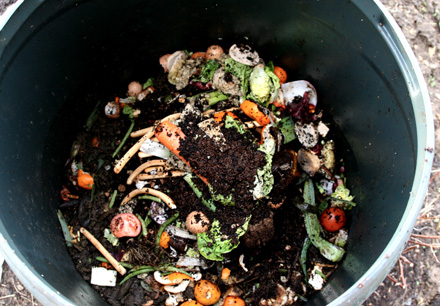
Question: How Do You Compost? (Please Comment!)


Dear Readers,

Help me out. I really want to compost. I feel guilt every time I toss watermelon rinds and carrot peelings in the trash. But I'm having trouble jumping in and trying it. Here are my issues:
  • There are multiple methods. Which one is the best for me? Note that I have actually ruled out worms because a couple of my friends tried that method and it seemed like a lot of work.
  • If it takes too much time, I will fail. I know, because I watched two tomato plants die over the summer simply because I didn't water them. (In case you are concerned, my husband is in charge of watering our new tree.)
  • I have a toddler. A crazy, gets-into-everything, I-cannot-control-her toddler. I need to be able to let her roam somewhat unsupervised in the backyard or I will lose my mind. We are also hoping to get a dog. I cannot have an amorphous pile of compost that my toddler or future dog will get into.
  • I'm scared of attracting vermin. I've had ants, cockroaches, fruit flies, and rats. There are also plenty of stray cats and dogs in my neighborhood that I would like to stay off my property.
  • I am completely willing to drop $100 to $200 on a compost bin if it will solve all my problems and make all my composting dreams come true. But I'm scared I'll buy a bin, and it won't work all that well, or won't make composting easy-peasy enough, and then I won't use it, and then I'll have a big hunk of plastic in my backyard and a lot of eco-guilt.

Click here to continue reading (and to comment!) at The Green Phone Booth.

If you are a composter, I want to hear from you! Please click over and share your wisdom.

Use Eco-friendly and PVC-free Yoga Mats to Avoid Phthalates and Other Toxic Chemicals


Once I began exercising again after my third child was born, I decided it was time to retire my decade-old yoga mat and invest in a new one. My old yoga mat was very thin and not very high quality (it came free with a yoga DVD), but still usable. However, after years and years of using it, it dawned on me that it was almost certainly made of vinyl (PVC).

PVC is arguably the most toxic plastic. It's made with toxic chlorine which results in toxic dioxin being released into the environment. PVC products are also made using toxic additives such as lead and endocrine-distrupting phthalates, additives which readily migrate and off-gas during the use of PVC products. I especially wasn't comfortable with exposure to phthalates, which are added to PVC to make it soft and flexible (like a yoga mat), and which readily migrate to the surface of PVC products in which they are found. Phthalates also readily pass from mother to fetus through the placenta and are also found in breastmilk.

Phthalates are endocrine disruptors and have been linked to:
  • lower testosterone levels
  • decreased sperm counts
  • poor sperm quality
  • malformations of the male reproductive tract and testicular cancer
  • obesity
  • reduced female fertility
  • preterm birth and low birthweight
  • a worsening of allergy and asthma symptoms
  • behavior changes

Natural (PVC-free) Yoga Mats


Ten years ago, I'm guessing it was pretty difficult to find a PVC-free yoga mat. But now, thankfully, there are many PVC-free options. I wanted a natural rubber mat, and also a thicker one that would give me some decent cushion on top of my hardwood floor. I ended up purchasing the Gaiam Sol Power-Grip Yoga Mat made of natural rubber (note: I remember that it smelled strongly of rubber initially). It is pretty thick (4 mm) and has a nice grip to it too. I use my mat for beginning yoga but also for general exercise (while barefoot on hardwood) that includes pilates, weights, cardio, and stretching. I do not get super sweaty when I workout and am not terribly concerned about slippage. If you are a serious yogi, see the reviews below by yoga experts.

Some other natural (PVC-free) yoga mats include:


TPE and PER Plastic Yoga Mats


There are also less expensive synthetic yoga mats made from Thermoplastic Elastomer (TPE) and Polymer Environmental Resin (PER). TPE is a synthetic rubber that is touted as a healthy alternative to PVC. According to Thinksport, TPE is "free of BPA, PVC, Lead, Phthalates, Dioxins, and biologically toxic chemicals." What exactly TPE is I couldn't tell you. But I feel confident stating that it is far better than traditional PVC.

Yoga Mats Made from Thermoplastic Elastomer (TPE) 


Probably the least expensive alternative to traditional PVC is Polymer Environmental Resin (PER), which is touted as a less-toxic form of PVC. According to one manufacturer, which describes PER as "clean PVC," PER is free of "phthalates, dioxins and furans, phenal, or heavy metals and has a ecologically safer method of production which is better for the workers and the environment."

Yoga mats made from Polymer Environmental Resin (PER)


For my daughter, who often likes to "exercise" with me, I got a smaller mat so it wouldn't take up as much room. I purchased the Namaste Kid's Eco-friendly Kids Yoga Mat (made of PER). It measures 24" by 48" and is much thinner than mine, but suitable for my toddler, 4yo or even 6yo. It's main purpose is really to keep them off my mat and out of my way. I actually didn't realize PER is a form of PVC when I bought it. I couldn't find a small-sized rubber yoga mat. In retrospect, I would have preferred a TPE mat such as the Little Yoga Mat for my kids, but I don't feel strongly enough about it to stop using the PER mat.

Looking for additional PVC-free products? Check out these posts that describe and review PVC-free:
Stay tuned for additional posts about PVC-free alternatives to traditionally vinyl products.


Additional Eco-friendly Yoga Mat Reviews for Serious Yogis


How do you avoid PVC?


Would you like more ideas and tips about Going Green Gradually? Sign up for my free email subscription to get each of my posts delivered to your inbox (I usually post one or two times a week). You can also follow me on FacebookGoogle PlusPinterestTwitter, or with your favorite RSS Reader. I hope to see you again soon!

Disclosure: This post may contain affiliate links. Your purchase via these links helps support my blog. Thank you for your support. Read my full disclosure policy here.

What's So Bad About Vinyl Plastic (PVC)?


I have a general avoidance policy towards plastic, particularly disposable plastic. I seek less toxic alternatives to plastics whenever I can. But I make an extra special effort to avoid certain plastics, including polyvinyl chloride (PVC), also known as vinyl or the #3 plastic. The Center for Health, Environment and Justice (CHEJ) calls PVC "the most toxic plastic for children’s health and the environment."

What makes PVC uniquely toxic? 


In a nutshell, PVC plastic is uniquely toxic among plastics because of its highly toxic ingredients which readily migrate into the environment during its production, its use, and its disposal.


Toxic Ingredients

Pure PVC plastic is 57% chlorine, a toxic substance whose production generates substantial pollution (see below). PVC plastic is the only plastic made with chlorine. In addition, PVC plastic requires toxic additives, including heavy metals such as lead, endocrine-disrupting phthalates, and toxic flame retardants, in order to be made into stable and usable consumer products. These additives are released during both the use and disposal of PVC products.

Toxic Production


A basic building block of polyvinyl chloride is chlorine, and chlorine production releases dioxins into the environment.
  • According to CHEJ, dioxins are "a family of highly toxic chemicals that are known to cause cancer, reproductive, developmental and immune problems." 
  • Dioxin has been classified as a known human carcinogen by the International Agency for Research on Cancer (part of WHO) and the U.S. National Toxicology Program. 
  • Some scientists assert that there is no safe level of dioxin exposure for humans. 
  • Dioxins are persistent and bioaccumulative. Most human exposure is through food, mainly meat, dairy products, fish and shellfish (dioxins concentrate in the fatty tissue of animals).
  • In addition to dioxin, chlorine production also results in mercury emissions and asbestos waste. 
  • Communities surrounding PVC plants are particularly susceptible to the toxic chemical pollution from PVC production.  

Toxic Use


The toxic additives in vinyl readily leach and migrate out of PVC products. For example:
  • Merely handling a binder made with PVC stabilized by lead can result in lead exposure. The lead in the PVC migrates to the surface where it is readily picked up by your hand and then transferred to the mouth. 
  • The phthalates added to make soft and pliable vinyl products, such as shower curtains and children's lunch bags, easily migrate or off-gas, making them easy to inhale or ingest
  • Toxic tris flame retardants are added to PVC products such as vinyl flooring and are released as off-gassing occurs from the vinyl. 
  • According to CHEJ, "Scientists have found certain vinyl chemicals linked to asthma, cancer, birth defects, learning and developmental disabilities, obesity, diabetes and other preventable chronic diseases on the rise." 

Toxic Disposal


Whether a PVC product ends up in an incinerator, landfill, or recycling center at the end of its lifespan, PVC is bad news.
  • When garbage is incinerated (still a method of waste disposal in many states), additional dioxins are released into the environment. Dioxins are also released due to the numerous accidental fires that burn buildings and vehicles, two sectors that use substantial amounts of PVC. 
  • Many PVC additives, including phthalates and heavy metals such as lead, slowly leach out of PVC plastics over time when placed in a landfill (many of which are unlined), eventually contaminating ground and surface water. 
  • Vinyl is the least recyclable plastic because of the diversity of additives used to make different types of PVC products. In addition, when PVC-products are accidentally mixed with non-chlorine plastics, they contaminate the entire recycling process.
  • According to a 2004 CHEJ report, "Non-durable (short-lived) products account for more than 70% of PVC disposed in municipal solid waste in the U.S."

Avoiding PVC


Unfortunately, PVC can be difficult to avoid because it's is one of the most widely used plastics and it turns up everywhere. The good news is that more and more alternatives to vinyl products are becoming available. Check out these posts that describe and review PVC-free:

I'll be discussing additional PVC-free alternatives in upcoming posts.


Sources/ Further Reading


Would you like more ideas and tips about Going Green Gradually? Sign up for my free email subscription to get each of my posts delivered to your inbox (I usually post one or two times a week). You can also follow me on Facebook, Google Plus, Pinterest, Twitter, or with your favorite RSS Reader. I hope to see you again soon!

Disclosure: This post may contain affiliate links. Your purchase via these links helps support my blog. Thank you for your support. Read my full disclosure policy here.

Thrift Store Find: "Like New" Birthday Gifts for Kids


Birthday parties. When you have young children, it seems like another one is always looming right around the corner. Since I hate to shop, I tend to stock up on gifts when I have the chance so I don't have to run out and grab something for every kid's birthday. I keep a bin of kids' gifts in the garage right next to my bin of to-be-reused gift wrapping supplies.

My favorite place to stock up on children's gifts is the thrift store. Oh, I have found some real gems in the toy department. A large wooden construction kit of bolts and screws. Ravensburg puzzles and Eeboo sewing cards. Problem is, you can only give second-hand gifts to close friends who you know will appreciate... a second-hand gift. Which is not every parent, nor every child to be sure. But now and then, you can sneak in a second-hand gift even to the unsuspecting. For me, that sneaky second-hand gift is most often not a toy (since, sadly, most folks expect a new toy to be all wrapped up in a lot of packaging and sealed in plastic wrap) but a book. A used book purchased at the thrift store that looks like new. Or if not "like new," then at least no worse-looking than many of the toddler-handled books you find at Barnes & Nobles.

The photo above shows a stash I purchased for around $10.


Easy Eco-tip Tuesday: Unjunk Your Mail Box


We purchased a home a little over a year ago. And with that home I inherited yet another batch of junk mail. Some days the mail box was jammed so full with the grocery circular as well as magazines and catalogs from the former resident that I could barely get my mail out. Luckily for me, I cleverly documented the unjunking process for myself on this blog about two years ago.

If your junk mail is clogging up your mail box and hogging your recycling bin, follow these four simple and free steps to an unjunked mail box. You'll be happy you did!

How to Unjunk Your Mail Box

Step 1: Save Your Junk
Series Reprise and Final Tips

Related Posts

Easy Eco-tip Tuesday: Clean with Vinegar
Easy Eco-tip Tuesday: Shop at Your Local Farmers Market
Easy Eco-tip Tuesday: Wait One Week to Make a Purchase


Are you interested in Going Green Gradually? Sign up for my free email subscription to get each of my posts delivered to your inbox (I usually post two or three times a week). You can also follow me on FacebookPinterestTwitter, or with your favorite RSS Reader. I hope to see you again soon!

CONNECT WITH ME


© 2008-2020 Eco-novice: Going Green Gradually All Rights Reserved

Copyright © Eco-novice | Powered by Blogger

Design by Anders Noren | Blogger Theme by NewBloggerThemes.com