Showing posts with label summer. Show all posts

6 Tips for a Non-toxic Summer


We've been topping 80 degrees regularly for the past few weeks and while slogging through the final month of school my thoughts are all about swimming, sunshine, and SUMMER!

Here are 6 tips for enjoying a safe, healthy, non-toxic summer.

Cover up and use safe, effective sunscreen. 


My preferred method of sun protection is to cover up with long sleeves and hats. But for long days at the beach and other outdoor adventures, you will also need sunscreen. When selecting a sunscreen for my family, I look for sunscreens that use mineral/ physical sunscreens as active ingredients and that offer broad spectrum protection. I choose mineral sunscreens such as zinc oxide and titanium dioxide as active ingredients rather than chemical sunscreens because chemical sunscreens are known endocrine disruptors. I look for broad spectrum protection against both UVA and UVB rays since both types of rays have been linked to skin cancer. I avoid sunscreens with controversial nanoparticles (mineral sunscreens are often nano-sized) and harmful inactive ingredients such as Vitamin A/ retinyl palmitate (which may actually speed development of skin cancer), or fragrance. Some of my family's favorite sunscreen products include:

Minimize the Risks of Swimming in Chlorinated Pools


Last summer one of my kids' favorite activities was swimming with friends at a local pool. So this summer I decided to fork over the money for a pool membership. Which means I am committing to taking my kids swimming frequently in order to get my money's worth. But the pool is chlorinated, as most are, and swimming in chlorinated pools has certain risks. Nonetheless, I believe for my family the pros of physical activity and fun with friends outweigh the risks. Still, I'd like to mitigate those risks as much as possible. First a bit about the risks.


The Dangers of Swimming in Chlorinated Pools


Feel free to skip over this section and go straight to the strategies for minimizing the risks below. We don't all need to know the depressing details! But for those interested, here goes. When contaminants such as sweat, hair, sunscreen, or urine mix with the chlorine in the pool, they form disinfectant by-products, or DBPs. One type of DBP, chloramines, is responsible for the strong chlorine smell we associate with pools. DBPs are known respiratory irritants. Many DBPs are toxic or suspected carcinogens.

Indoor chlorinated pools create an additional danger compared to outdoor pools because of the enclosed atmosphere. I have long disliked indoor pools because of the mugginess and extra strong chlorine smell (which is actually chloramines) of the indoor air. Volatile chemicals can be transferred from water to air and then inhaled by swimmers and spectators. Outdoor pools offer greater ventilation.

Numerous studies have connected swimming in chlorinated pools to health problems, particularly for the very young and the highly exposed (for example, elite swimmers and pool workers). Health problems associated with exposure to chlorinated pools include increased risk of respiratory problems, childhood asthma and allergies, DNA damage and bladder cancer (see this discussion of the effects of DBPs). Several studies have highlighted the risks of swimming in indoor chlorinated pools in particular. For example, studies have linked swimming in indoor pools to testicular damage, as well as asthma and recurrent bronchitis in children. But the research on DNA damage and cancer is in the early stages, and the research reviews on chlorinated pool exposure and childhood respiratory problems that I read stated that the connection is inconclusive (since some studies find no connection, or even associate swimming with a decrease in respiratory symptoms).

For me, the bottom line is that toxic chemicals are present in and around chlorinated pools, and while researchers are busy studying the health effects of those compounds, my family will enjoy the benefits of recreational swimming while doing our best to mitigate our exposure to harmful chemicals.


© Depositphotos.com/witch999


How to Limit Exposure to Harmful Substances in Chlorinated Pools


Protect Your Family with Safe Sunscreen by Goddess Garden {Review}


This post is sponsored by Green Sisterhood. All opinions are my own.

Get outside!


As parents, it is hard not to worry about all the things in life that could go wrong. Unfortunately, there are risks even to simply enjoying the great outdoors! Where I live we have to contend with West Nile Virus from mosquitoes, Lyme Disease from ticks, rattlesnakes, mountain lions, accidental injuries, and, of course, skin cancer. Most people know that skin cancer is the most common form of cancer in the U.S., but what you may not know is that rates of skin cancer have tripled in the last 35 years. Sun safety -- covering up and using safe, effective sunscreen -- is especially critical for children, since serious childhood burns can double a person's chance of developing skin cancer.

So does this mean we should avoid spending time outside? Of course not! After all, the benefits of spending time outside (and the risks to spending too much time indoors) cannot be ignored either! The amazing benefits of time spent in nature include: reduced stress, better attention and cognition, better immune functioning, decreased anxiety and depression, and an extended lifespan! While time indoors exposes you to indoor air pollution as well as health problems associated with a more sedentary lifestyle. Recently scientists have even suggested that too much time indoors may be responsible for the rapidly rising rates of myopia (near-sightedness) in youth.

The solution is clear: spend lots of time outside (we aim for at least 30 minutes in nature everyday!) but be aware of and mitigate the risks. We come inside at dusk when the mosquitoes are out in full force. We check for ticks after hikes. We discuss with our kids how to recognize and react to rattlesnakes and mountain lions. Whenever practical, we cover up with long sleeves, long pants, and hats while outside. And during the sunny summer months in particular, we wear sunscreen. Lots and lots of effective & safe sunscreen. Because some sunscreens do not effectively protect against UV rays, and others contain toxic ingredients that may actually increase your chance of cancer and other health problems.

Choose a Safe & Effective Sunscreen


When selecting a sunscreen for my family, I look for the following:
  • Mineral or physical sunscreens rather than toxic chemical sunscreen. Mineral sunscreens reflect sunlight and provide a physical barrier between you and the sun's rays while chemical sunscreens absorb the UV rays. Chemical sunscreens such as oxybenzone are also known endocrine disruptors.
  • Broad spectrum protection against both UVA and UVB rays. UVA rays damage DNA and cause aging, while UVB rays cause burns. Both types of rays have been linked to skin cancer. 
  • No nano-particles (generally considered to be particles smaller than 100nm). Many sunscreens that use mineral sunscreens utilize nano-particles to avoid the sunscreen leaving a ghostly white sheen on your skin. But there are health concerns associated with applying super tiny particles to your skin.
  • Free of harmful ingredients such as Vitamin A/ retinyl palmitate (which may actually speed development of skin cancer), fragrance, hormone disrupting chemicals, liquid plastics, and alcohols. 

Garden Goddess Organics sunscreens offer all the above and more!
Goddess Garden sunscreens use only mineral sunscreens, provide broad spectrum UVA/ UVB coverage, use only safe non-toxic ingredients, and are free of nano particles. In addition, they are
  • Certified organic, gluten-free, and non-GMO
  • Biodegradable and reef-safe (so important if you spend time in the ocean!)
  • Made with recyclable packing 

safesunscreen


We have been using Garden Goddess Organics products for over a year. Last summer we used Garden Goddess sunscreens nearly daily for swim lessons, beach trips, hikes, and other frequent outdoor adventures. While wearing the sunscreen as advised (reapplying every 2 hours, or more often when in water), we never got burnt. It rubs in easily and does not leave any ghostly white residue. We love the convenience of the continuous non-aerosol spray and trigger spray for wiggly limbs ready to jump in the pool, run across the sand, or hit the playground. Garden Goddess makes the only safe and non-toxic sunscreen spray I am aware of, and it’s the only spray I have ever considered using. We use the tube lotions almost daily on our faces. The sport sunscreens offer 80 minutes of water resistance and are perfect for swimming and beach days, or active outdoor adventures that will involve lots of sweating!


safesunscreensafesunscreen


So get outside and enjoy nature, worry-free! When you use Goddess Garden Organics sunscreen, you can protect your family against sun damage without any adverse effects on your family’s health or the environment.

Buy (with a discount!) Safe Sunscreen


You can try Goddess Garden Organics sunscreen yourself for free right now! Simply be one of the first 600 people to sign up for their newsletter. The first 100 people to sign up receive 1 oz tubes. I keep this size in my purse at all times, just in case I ever forget my regular tube. It is also a great size for travel! The next 500 sign ups receive free natural sunscreen sample packs (perfect for on-the-go!). Offers good while supplies last. Note: all free 1 oz tubes and sample sunscreen have been claimed.

You can purchase Garden Goddess sunscreen for 20% off now through July 31st with the code #SunSafeGoddess. Don't miss this chance to stock up for the summer!
safesunscreen


Would you like more ideas and tips about Going Green Gradually? Sign up for my free email subscription to get each of my posts delivered to your inbox (I usually post one or two times a week). You can also follow me on Facebook, Google Plus, Pinterest, Twitter, or with your favorite RSS Reader. I hope to see you again soon!

Disclosure: This post may contain affiliate links. Your purchase via these links helps support my blog. Thank you for your support. Read my full disclosure policy here.

Avoiding Toxins in the Backyard


School's out and that means that my kids are spending a lot more time in our backyard. I am a big fan of outdoor play for kids and adults. Unfortunately, there are several ways that we adults inadvertently make our backyards less of an ideal play location for our children by introducing toxic chemicals. Here are some ways you can make sure that your backyard stays safe and eco-friendly this summer.


Pesticide-free Bug Control


In my area, hot weather means bugs. They sneak in your home looking for moisture, shelter from the heat, and, of course, some morsels to eat. Just the other day the Pesticide Salesman stopped by my door to let me know that two of my neighbors were spraying for ants and spiders and did I want to sign up too (at a discount, of course!) so that they didn't all run into my house when he, "flushed them out" of the neighbors' yards and crawl spaces. Turns out I'm much more worried about the neurotoxins in pesticides than ants and spiders, so I turned him down. But I'm not a huge fan of bugs in my house. I've had ant, fruit fly, and cockroach invasions and lived to tell the tale, without the use of toxic pesticides! This is my tried-and-true ant bait/ trap (keep away from little hands and animals), and a non-toxic spray we use around the perimeter of our house to discourage cockroaches. House spiders are generally welcome at my home! Check out Beyond Pesticides for safe alternatives to toxic pest control.

The Non-toxic Eco-friendly Sandbox


Does Play Sand Cause Cancer?


Last summer I purchased a used rigid plastic sand box with a cover on Craig's List. Once I had the sandbox, all I had to do was buy some sand. Unfortunately, this decision was not as simple as I had hoped.

If you live in California, you've possibly seen the Prop 65 cancer warning on bags of play sand. That's because the super cheap fifty pound bag of sand you can pick up at home improvement stores or garden centers isn't actually sand. According to Healthy Child Healthy World, "'Play sand' is a manufactured material made from ground quartz that can contain carcinogenic crystalline silica and a mineral called tremolite, which is related to asbestos."  You can read more about the classification of crystalline silica as a human lung carcinogen in this OSHA document.

Some emphasize that the risk is mainly an occupational hazard for sand blasters who experience intense and prolonged exposure to the crystalline silica dust. While children certainly aren't subject to the same degree of exposure as sand blasters, parents still may not be comfortable with their children inhaling respiratory irritants linked to cancer. The issue isn't the silica, which is present in all sand, but the size of the particles. Finer particles can be inhaled into the lungs, causing respiratory irritation and an increased risk of mutations and tumors. So if you see a dust cloud above the sand box, you have an issue.

Non-toxic Sand

Nature in Our Backyard: Hummingbird Chicks Leaving the Nest


I've been wanting to link up with Green Bean's Spot the Pollinator series, but haven't had a chance to take many photos of pollinators. But then I remembered the miracle we witnessed during June 2012 in our last home. And which, incidentally, I have never posted about (except a brief mention in this post on Green Phone Booth).

Two years ago, my kids and I got to watch a hummingbird build her nest right under the (plastic fake wood) lattice over the back patio of our rental home. We then watched that hummingbird sit on the eggs in her nest. I had never seen hummingbird wings as anything other than a blur before this experience. Eventually we saw little tiny hummingbird heads poking their heads over the edge of the nest as their mama brought them food.

Make Time Every Day to Do the Things You Love

On a walk around 7:30 pm. The kids should have been getting ready for bed, but oh well.

Once upon a time I taught elementary school for many years in Los Angeles. Although working with kids was often rewarding, there was plenty about teaching that I did not enjoy. Some of the required curriculum was decidedly lackluster. Then there was the endless paperwork, the depressing home situations, the demoralizing staff meetings (your test scores still suck!), the discipline issues, the test prep, and the staff politics. Worst of all, I felt like a failure almost every day. In the beginning, I just didn't know what I was doing. And even later when I did, there was simply not enough time in the day to do everything, and certainly never enough time to do it well.

But despite the overwhelming pressures of teaching in low-income under-performing schools (often in danger of being "taken over" by the state), I decided for my own sanity to spend some time each day doing things that I enjoyed and considered important, even if nobody else cared that I did them (or even if my principal and other higher ups actively discouraged me from doing them). I read aloud to my students every day. We exercised every day. And we talked about poetry and sang songs every single day.

Turns out that learning to cope with an incessant sense of failure and always having more to get done than can possibly get done were excellent preparation for being a parent. Now as a parent of three little ones, when the sense of failure becomes especially overwhelming, I remember this lesson from my teaching days: make time every day to do the things that you love.

How to Get Your Kids to Play Outside


Some weeks my kids practically live outside. But certain days they need a little nudge to go outside to play. Once I actually get them outside, mother nature usually takes care of the entertainment. Here are some ways I have successfully enticed my kids to go outside during our 30 x 30 Nature Challenge.

13 Benefits of Spending Time Outside

On an after-dinner family walk around our block.

We've completed Week 1 of the 30 x 30 Nature Challenge (30 minutes outside in nature for 30 straight days). I'm posting weekly on my blog and several times throughout the week on Facebook, Google Plus, Twitter, and Instagram using the hashtag #30x30challenge about our experiences and would love to read your comments and posts about your experiences completing the challenge as well.

For those who need some extra motivation to get outside, may I remind you that the benefits of being outside in nature are now very well-documented. I scanned a bunch of articles and quickly put together the following list.

Spending time in nature
  • reduces stress
  • improves attention and memory
  • speeds recovery from surgery
  • reduces pain
  • promotes good health
  • boosts immune function
  • improves creativity
  • improves mood and energy levels
  • boosts empathy
  • relieves anxiety and depression
  • improves cognition
  • extends life span
Sources: Spending time in nature makes people feel more alive, study shows; Medical: Spending time outside has many health benefits; The Claim: Exposure to Plants and Parks Can Boost Immunity; Connecting With Nature Boosts Creativity and Health; Take Two Hours of Pine Forest and Call Me in the Morning; The Value in Reconnecting with Nature; Health Benefits to Children from Contact with the Outdoors & Nature


I'll mention one more benefit I reflected upon this week: community! When we spend time outside in our neighborhood, we frequently cross paths with our neighbors. These impromptu interactions lead to learning each other's names, planning play dates, and the borrowing and lending of tools. 

Here is how our first week of the 30 x 30 Nature Challenge went. 


Ten Tips for a Terrific Staycation


Imagine a vacation where:

  • You experience new adventures each day but sleep in your own beds each night.
  • You can eat homemade, healthy foods every day.
  • You don't have to help your children use a restroom in a gas station or at the back of an airplane.
  • You don't have to listen to small children crying/ screaming/ whining/ complaining/ fighting for hours on end in a confined space or while surrounded by unsympathetic strangers.
  • You don't have to pack any clothes, toiletries, or favorite children's toys.
  • You don't waste any of your vacation budget on airline tickets or car fuel.
  • None of your precious vacation days are wasted traveling to and from your destination.

Say hello to the Staycation: the vacation you take right in your own backyard.


Our Accidental Staycation


30 Ways to Enjoy 30 Minutes in Nature with Your Kids

Image credit: David Suzuki Foundation

This May I'm joining the David Suzuki Foundation's 30 x 30 Nature Challenge (30 minutes outside in nature for 30 days) and I hope you will too! I'm going to skip right over the part where I convince you how important it is to spend time in nature each day (see a cool infographic about that here), and dig right into the deets. I'm hoping to post weekly on my blog and several times throughout the week on Facebook, Google Plus, Twitter, and Instagram using the hashtag #30x30challenge about how we are doing and would love to read your comments and posts about your experiences completing the challenge as well.

I plan to do this challenge with my children: 30 minutes of time outside with my kids every day, but I will also accept separate time if necessary. For example, I sometimes go for a walk with my youngest in a stroller for exercise in the morning (while my older two are at school/ preschool), but then if the older two spend 30 minutes in the backyard in the afternoon, we've completed the challenge! But I'd prefer to do it all together if possible.


Goddess Garden Spray Sunscreen: Convenience without Toxic Chemicals {Review}


This post is sponsored by Green Sisterhood. All opinions are my own.

Summer is just around the corner (at least here in Northern California!). It's time for me to sign up my three little ones for swim lessons and to get out the beach and swim gear. This is the time of year when I make sure we are well-stocked with non-toxic, broad spectrum sunscreens so that I'm not stuck with an old expired sorta icky tube of sunscreen the first day of swim lessons or the first time we head for the beach. This summer we will be using Goddess Garden Organics sunscreens. Goddess Garden sunscreens are safe, effective, convenient to use (non-toxic sunscreen spray, anyone?), and non-whitening.

Safe and effective ingredients


Here is a surprising truth: there is no proof that sunscreens prevent most skin cancers. Researchers offer several explanations for this counter-intuitive finding: one is that people who use sunscreens spend more time in the sun than those who don't (ultimately exposing themselves to more UV rays than the non-sunscreen users who stay out of the sun); there is also evidence to suggest that some ingredients commonly used in sunscreens (such as vitamin A/ retinyl palmitate) may actually speed the development of skin cancer; finally, another possible explanation is that many sunscreens protect users only against sunburns from UVB rays without protecting users from UVA rays, which are linked to skin cancer and premature aging.


Buying an Eco-friendly Outdoor Wood Play Structure: Why I Chose CedarWorks


After our used pressure-treated wood play structure debacle, I began researching options for new wood play structures. I seriously considered six different manufacturers. I searched online for reviews and discussions in parenting forums, drove considerable distances to look at play structures in person, asked salespersons and customer service representatives numerous questions over the phone, and crunched a lot of numbers. Although it was a bit of our stretch for our budget, in the end we chose to purchase a CedarWorks Frolic play set for the reasons explained below.

Why I Chose a CedarWorks Frolic Play Structure


Tips for a Non-toxic Summer


Use effective and safe sun protection.


The best sun protection is to cover up with hats and long sleeves and to seek or create shade, particularly when the sun is most intense. When you do use sunscreen, choose one that does more good than harm. Use lotions or creams that use a mineral sunscreen like zinc oxide (without controversial nanoparticles) to provide long-lasting protection against both UVA (causes skin cancer) and UVB rays (causes sunburn). Avoid retinyl palmitate/ retinol/ vitamin A (found in about one-fourth of all sunscreens), which speeds the development of skin tumors and lesions when exposed to light. Also seek "chemical-free" UPF-rated swim wear that offers UV protection due to the weave of the fabric and not as a result of the use of sunscreen chemicals on the fabric.

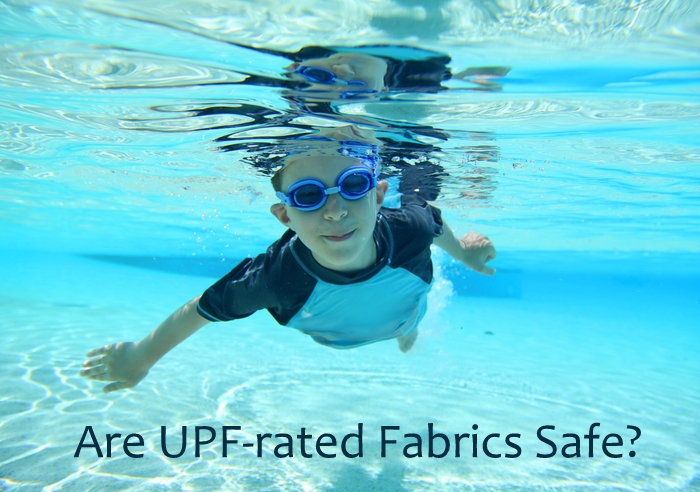
UV-Protective Swim Suits and Swim Shirts: Are They Safe?

© Depositphotos.com/micut


[Updated May 2016]

Whenever shopping for hats and other outdoor clothing products, I've always steered clear of products with a UPF (Ultraviolet Protection Factor) rating because I've been concerned that the UV-protection might be through the application of chemical sunscreens. Chemicals sunscreens such as oxybenzones are often endocrine disruptors and other undesirables.

This year, however, I needed to purchase a swim suit for my 4-year-old daughter. And it is difficult if not impossible to find a swim suit or swim shirt for children these days that does not advertise a UPF rating. In the past my kids have mostly worn hand-me-down swimsuits and swim shirts. I'm also willing to use second-hand swim shirts purchased at thrift stores. Although I vaguely understood that these hand-me-down and second-hand items most likely were UV-protective I didn't worry too much about it. Now, shopping for swim clothes online, I was confronted again and again with products advertising their UPF rating, so I decided to do some research into how clothing is made UV protective before making a purchase.


What Makes Fabrics UV Protective?


Popsicle Weather


The weather is heating up where we live and that means it's popsicle weather. I have resisted buying popsicle molds for many years because I didn't want to buy plastic ones, even if they were BPA-free. But I finally found a fabulous stainless steel one: the Freezycup™ Stainless Steel Ice Pop Molds made of high-quality food-grade stainless steel 18-8 (304). The Freezycup™ is made by Life Without Plastic, an amazing Canadian company I first read about on Beth Terry's blog My Plastic-free Life (use dropdown menu in left sidebar to switch from CAN$ to US$).

Each Freezycup™popsicle maker has 4 parts: the popsicle cup or mold, lid, silicone gasket (goes in center of lid and holds stick in place), and reusable bamboo stick. I love that the stick is reusable. We have used our sticks at least 10 times and they still look great. It can be tricky with small ones to keep track of all these parts. My children mostly eat their popsicles outside, so we have chosen a spot where they can set their sticks and lids (with gasket) when they are done. They know if these parts get lost, there will be no more popsicles, and so far that has been plenty of motivation.

Does Your Sunscreen Protect Against Skin Cancer?


Hello, June! School's almost out and the temperature is rising. It's time to hit the beach. Most of the time we opt for covering up over wearing sunscreen when spending time in the sun, but for long outdoor adventures, we use sunscreen.

Environmental Working Group has released its 6th Annual Sunscreen Guide. Let's review the main reasons you need to consult this guide:

Ten Tips for Sun Safety


Last year I wrote about the surprising fact that, according to the FDA and the International Agency for Research on Cancer, there is no consensus on whether sunscreens prevent skin cancer. Because both UV radiation and many common sunscreen ingredients generate free radicals that accelerate skin aging and cause skin cancer, if you use sunscreen improperly, you may be causing more harm than good. According to EWG, "Most experts agree that people should use sunscreens to protect their skin from the sun, but they disagree widely on how well they actually work." Many experts now recommend clothing and shade, not sunscreen, as primary barriers from sun exposure.

My children and I spend at least two hours and as many as six hours outside whenever weather permits, which is nearly every day in northern California. We use clothing and shade as primary barriers from the sun, and sunscreen only on occasion (beach trips and a few other occasions). Here are my some tips for avoiding sunburns and carcinogenic UV radiation without exposing your family to harmful chemicals.


Of Sun and Sunscreen


I'm on a trip with my kids.  We remembered to pack all the stuff for the beach, except the sunscreen.  I usually buy sunscreen for my kids at Whole Foods, because I'm picky about ingredients.  Since we aren't near a Whole Foods, I was stuck buying sunscreen at the nearby Target.  My goal was to find a sunscreen that met the following 2 criteria:

1. Sunscreen protection from minerals instead of chemicals
Most sunscreens contain chemical sunscreens that mimic estrogen and are considered to be potential hormone disruptors. I stick to mineral sunscreens (titanium oxide and zinc oxide) which provide a physical barrier. Some people dislike that they can leave a white layer and make you look "ghostly."

2. No other ingredients that I immediately recognize as yucky
I wanted to avoid fragrance (which contains secret ingredients) and parabens, for example. This was really a split-second decision, because I didn't have time to do a bunch of research.
And guess what?  I found 2 sunscreens that fit the bill:


Johnson & Johnson Baby Sunscreen Lotion, SPF 40

And I found them right there in Target!  Note that I found them in the infant section, not the sunscreen section.  They also had a place for California Baby (a more "natural" line of personal products) brand sunscreen, which is sold in Whole Foods and which I have seen on lists of safe sunscreens for kids, but they were all out at the time.  The sunscreens I bought are not super cheap, by the way.  But I am willing to spend a bit more on personal products because I care about ingredients.  Also, we don't use that many personal products.  Now that I'm here writing this post, I am pleased to see that the J&J Baby Sunscreen is actually one of the recommended sunscreens.

Even though I live in a sunny climate, I don't slather sunscreen on my kids all the time.  I prefer to cover up with clothing and hats for time at the park.  A little sun might be good for us after all.  But when you spend all day at the beach, you really need to use sunscreen.  Even if you are sitting under an umbrella in the shade because of all the reflection (I know all of you already knew that, but I recently found this out the hard way).  

For those interested in even more information, here are some great resources on sunscreen from Environmental Working Group:

Find your sunscreen -- so you can see EWG's evaluation of your favorite sunscreen's UVA protection, UVB protection, and potential health concerns. Here is the information for the Johnson & Johnson Baby Sunscreen I bought, for example. 

EWG's Shopper's Guide to Safer Sunscreens -- a pdf with lots of handy info

9 Surprising Truths about Sunscreens:  for example -- There’s no consensus on whether sunscreens prevent skin cancer.


What do you look for in a sunscreen?

This post is part of Things I Love Thursday.

CONNECT WITH ME


© 2008-2020 Eco-novice: Going Green Gradually All Rights Reserved

Copyright © Eco-novice | Powered by Blogger

Design by Anders Noren | Blogger Theme by NewBloggerThemes.com